Alli Wade and her dog Maya take a 7 mile hike in the snow in Raleigh, NC. The two are originally from Minnesota, so they were one of the few that were loving the experience.
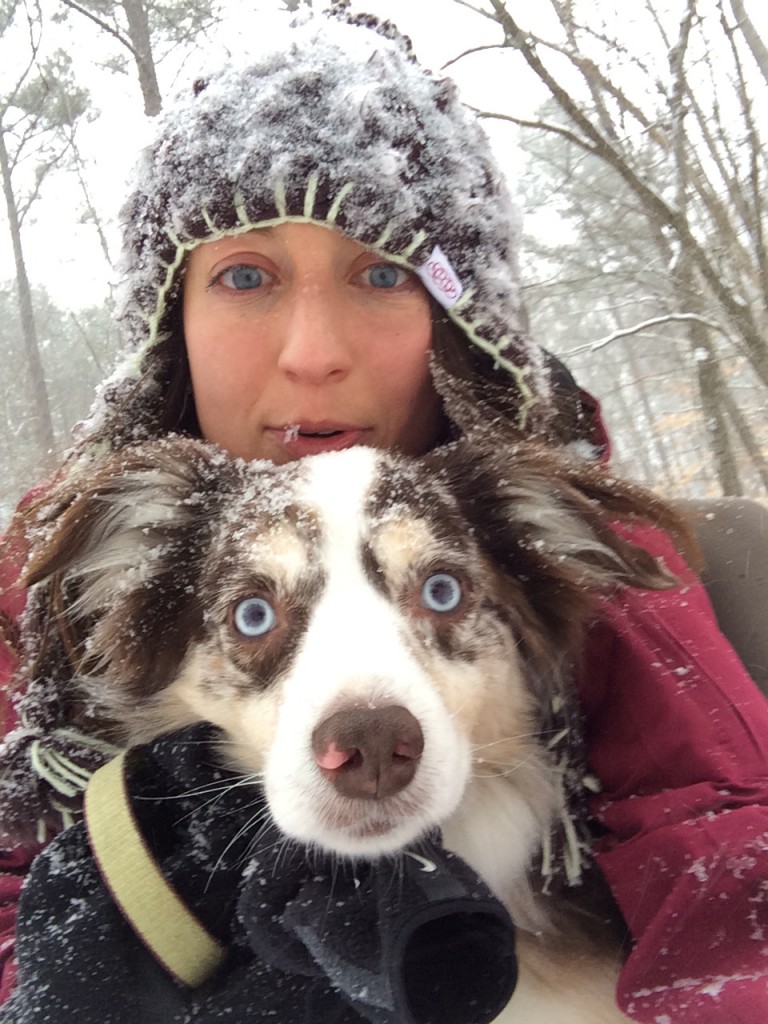
Alli Wade and her dog Maya take a 7 mile hike in the snow in Raleigh, NC. The two are originally from Minnesota, so they were one of the few that were loving the experience.
What is a guardian? I am not sure. It sounds like it could be another reality TV show that I don’t want to watch. My thesaurus says that a guardian is a “protector, sentinel, or keeper”. I consider myself a nature guardian, but none of those words describe what my feelings are. Last week, I scraped a dead squirrel off the road and buried it. Last summer, I let a dragonfly out of my car. I found a bunch of cans in the park and recycled them. Everyday I have many opportunities to express what I think is a guardian. During the school year my guardianship shifts to children and I try to stay connected to them, I am caring and encourage them to do their best everyday. My desire is to act on my student’s behalf, so they can take their place in the world, and contribute in a positive way.
I believe everyone expresses his/her guardianship in a unique way. I try to stay connected to the Earth and be caring, by physically doing something for the Earth on a daily basis. This is something I want to do, and in many ways, it is a type of food that sustains my spirit. I am not trying to save the world, and bragging about what I am doing for the Earth. But I feel blessed to live here, and I am trying to remain true to myself.
Fifty things you can do every day to be a nature guardian.
Still working on the other twenty-six…..
Help me out. Add to the conversation and say what you think a nature guardian is. Add to the list above.
How many of you walk the same trail each morning and are bored with the experience? That’s how I felt until I started paying more attention to my dog, “Mr Mook”. Every morning, Mook’s nose gives him a full report on what was on the trail the previous night. While he is getting more pumped up by the minute, I am just trying to “power through” the hike as quickly as possible, so I can get to work. Although, the walking gets my heart rate up, there isn’t any connection with the living things that I pass along the way.
So how could a person start having a similar experience as Mook? Every new smell puts a little more jump in his step. But taking a “smell hike” is never going to improve your experience on the trail, since his olfactory sense is almost 50 times better than ours.
But there are things you can do to connect more with nature, and experience the vitality that is in the woods near your home. Below are a few ideas that may help you find nature’s beauty, and improve your quality of life.
1. Silently name everything that you see, hear, and feel during a hike. “Naming” will keep you in “present time” and you’ll start seeing things with “fresh eyes”.
2. A variation on this activity is to find new things that you’ve never seen. This morning I saw 7 new things (I wonder if they were really “new” or if my memory is really poor). Regardless, you will finish the hike feeling great, and start your day on a positive note.
3. Walk slower than you usually do, and try to be as open as possible to everything around you. Look for trees that grow close to each other, or have a double trunk . Stop between the trees (or trunks) and attempt to feel the strong vibrations the trees are giving off. Then, walk between the trees (or trunks). (When I have done this, I have felt a little bump in my energy and even wondered whether the trees felt the same).
4. Lastly, my daughter Alli had the following comment about walking in nature with a companion: “From a very young age I learned to walk respecting nature. Staying light on my feet, and using gestures to communicate with my walking partners, rather than words. When I walk like this, I believe that the animals are more apt to go about their lives as usual.”
Walking with nature is about walking with intention and seeking beauty in your neighborhood. Share your experiences of what makes your morning hikes special and helps you connect with nature.
At 6:30 this morning, it was just starting to get light and I was walking Mr. Mook. I heard the spring call of a chickadee, somewhere in the woods. Since it was December, the call was such a welcome and unexpected sound that I stood there humbly for a minute. What sounds ring deep within your heart? Is it the first flock of migrating geese flying overhead; the trill of toads in early May?
How I Got into Listening
Years ago, I set a goal to learn every animal sound within my home range. I used a sound parabola and a tape recorder. A sound parabola is a parabolic disc that magnifies the sound of an object with a microphone. I recorded the sound, identified the bird, and then replayed the sound over and over until I learned it. It didn’t take long before I could walk through a forest and identify every sound I heard. How do you think it felt to be able to connect with animals, without ever seeing them? It was like walking through a door that did not ever exist before.
Why is listening important?
Sound is very life giving, and hearing certain types of sounds triggers deep feelings within a person’s body. For example, in the spring, when I hear the call of the first flock of Canada geese flying overhead, I feel very alive and thankful. In early November, the tundra swans migrate south at night. Their call, so high in the sky, makes me feel sad about the coming dark days of winter. And yet, ever so thankful to have this connection with these wanderers, who fly over and bless the land. Also, in Spring, when I hear the first rose-breasted grosbeak high in the trees, I linger as long as I can. A grosbeak’s call is like a tonic that heals all the empty places inside me.
How to Get Started Listening
Spring is the time to start learning the spring calls. What are top six sounds you hear in the Spring?
From March to April, in Minnesota, the top six calls are: chickadee (“fee-bee”); cardinal (“Cheer, Cheer, Cheer”); robin (melodic call); blue jay (“jay, jay,); white-breasted nuthatch (“peint,peint, peint”). Canada geese (honking) and chorus frogs (cricket sounds). Once you have learned the top six, you can branch out into some of the other common sounds: downy woodpecker, goldfinch, American toad, red-wing blackbird, or mourning dove.
But “listening” is not about “collecting” sounds, it is about letting the sounds come inside you and be a part you. When you hear a chorus frog or a robin, feel the pure beauty of it, and let it ripple through your body and you will feel more alive. As each year passes, the calls of birds and frogs have a deeper meaning. Here in Minnesota, we are going into winter, a time when there is very little natural sound. I am already looking forward to hearing the beautiful call of a robin singing from the trees.
What experiences with sound are in your heart? Share a comment, so others can enjoy it too.
Celebrated Minnesota naturalist, Sigurd Olson wrote in his book, Listening Point, “I named this place Listening Point because only when one comes to listen, only when one is aware and still, can things be seen and heard.”
I believe that Olson is talking about listening to inaudible vibrations. Just because we can’t hear a sound, doesn’t mean that there is no sound. All living things have a vibratory rate or wavelength. This wavelength is similar to an audible sound, but it can not be heard. When an eagle flew past me in silence this morning, I saw it, but it had a powerful vibration that touched my spirit. Also, later in the morning, there was a pileated woodpecker at my feeder, and it too had a unique vibration that impacted my body. The eagle and woodpecker are extreme cases, but all living things carry their own unique vibration or wavelength that we can connect with. When people talk about “picking up on the vibes of someone or some place, they are really talking about tuning into the unique vibratory rate or wavelength of that person, place or thing.
For example, the boundary waters in Northern Minnesota, is a place where I have felt an overwhelming vibration of silence. I remember being in a canoe on a wilderness lake and hearing a throng of sound within the silence. The vibrations filled every pore of my body and I “surrendered” to the silence.
There is nothing more magical than hiking or paddling in a wilderness area. What about listening to the everyday silence that we experience, as we go through the day?
I walk my dog every morning in a bur oak forest near my home. If I spend the time and walk with intention, listening to the silence of the oaks, or find beauty in the shapes of the glacial hills, then I will probably walk out of the park feeling more balanced and ready for the day. However, if I pull my dog along on a leash, hurrying past each twisted oak, and not connecting to the splendor that is present in the silence, then I probably should have skipped the walk and hurried off in my car.
Help me explain this better. Tell me what you have experienced in the silence of nature.
What are some magical things you remember about your childhood; playing football, hide and seek, flashlight tag, building forts? I worry that many children today never experience the childhood that I once took-for-granted.
Last week at school, we were reading the book, Hatchet. Hatchet is story about a boy who survives a plane crash in the north woods. To enrich their reading experience, I had my students work outside in groups building debris huts. It was the happiest that I have seen
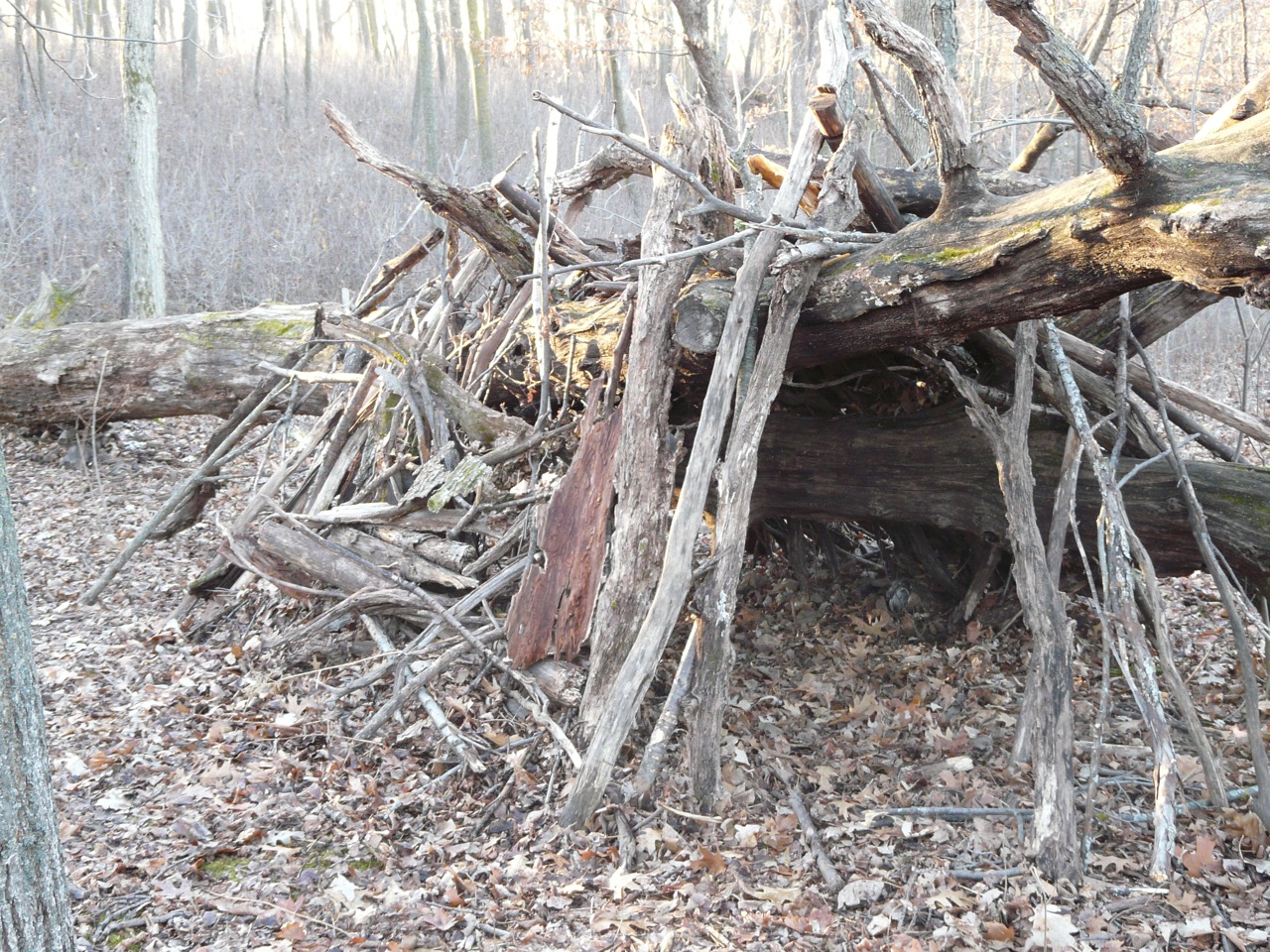
Debris Hut
some of my students all year. They had to work together, and create something out of a pile of sticks and leaves. I figured that it was the first time many had built a fort. But two of my students told me that they had built a fort out of sticks and garbage bags, and had eaten their lunch inside. Two others said they had built a fort, and it was so special that they had gone back repeatedly during the summer.
What is the big attraction of fort building? My daughter, Laurel gives an insight into this question. “I remember when I was in elementary school, the boys and girls built different forts. You had to be “invited” to enter someone’s fort. It was “tween” drama in action, all taking place in a house made of sticks! We built forts at home too. For some reason I remember having a cracker jack box out there, and sitting in the fort looking at the prize in the box.”
Laurel, also adds, “Forts were amazing for a number of reasons:
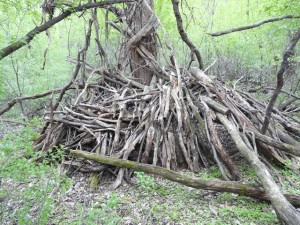
If you have no sticks, pitching a tent in the backyard is another form of a “fort building” that can be just as much fun.
In winter, building a quinzee hut is a great way to spend time outdoors. To make a quinzee, you pile up a bunch of snow, leave it for a few hours and then when the snow has compacted, you dig out a hole for yourself to hang-out in.
Rules of fort Building
Why build a fort? Just ask my students, “It’s fun, and you get to be outside”.
Share your fort building experiences.
When was the last time that you sat and observed nature? Find a great spot and sit or stand there for 10-12 minutes. While you are there, write down everything you see, hear, and feel.
Why I do it:
Life slows down. I start seeing things I didn’t know were there. My mind clears. The simple beauty of nature can be overwhelming. I can feel the wonder of the earth inside me, as well as outside of me. When I leave, I fill complete and ready for the challenges of my day.
Sitting under a tree is a form of self-medication. It is simple, low budget, and a conscious activity in which I am interacting with the earth.
I started doing this activity with kids a few decades ago and I didn’t call it “sit under a tree”, but “Solo hike”. The word “solo” got the attention of some kids, but scared kids who had never actually been out in the woods. Their main connection with nature and the word “solo” might have been from the reality TV show “Survivor”. I can only imagine what was going through those kid’s minds.
To do a “Solo Hike” you need to have a minimum of two adults, but five adults works the best. Before the hike, I check the area, and locate poison ivy patches, hornet nests or anything that might be a problem.
I take off with the group and randomly place kids about 30 yards apart along the trail. The last adult is the “dragon’s tail”. He will start slowly walking after 12 minutes and pick up the students that are sitting along the trail. The other parents will spread out along the trail. The class is usually strung out over a distance of 1/4 to 1/2 miles.
The rules of the hike are:
Below are some excerpts from student notes written during the first week of October:
Josh: “Ants are scurrying along the trail, looking for food. The tangle of branches, wrap around each other. The yellow and red trees sway to the beat of the wind. The water dances across the lake.”
Lillian: “I see millions of multicolored trees all around. I feel the cool crisp autumn wind. The falling leaves are landing on and beside me. I smell the autumn leaves on the ground and hear them rustling in the wind.”
Take ten minutes and sit under a tree, you won’t be sorry.
Background Information:
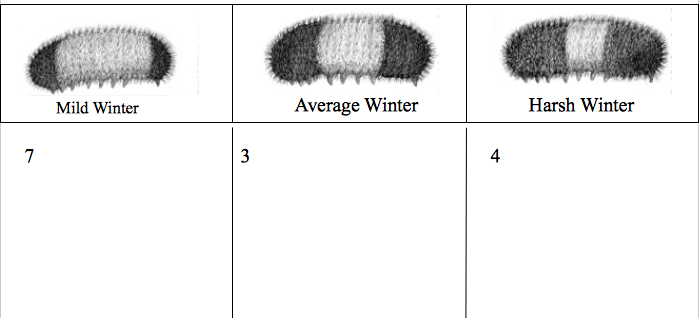
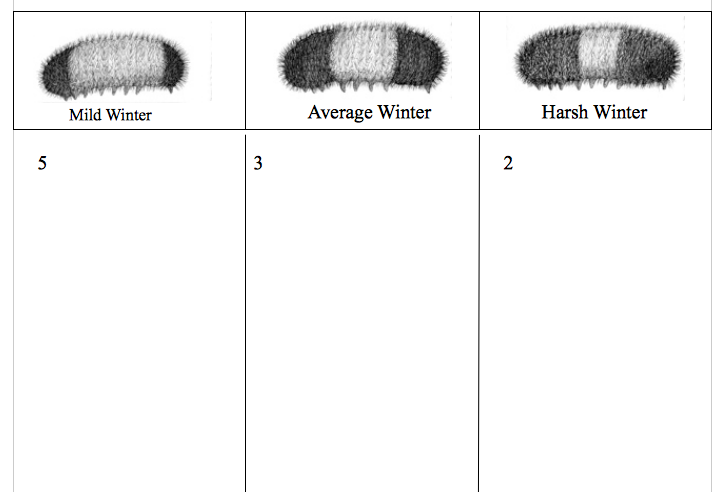
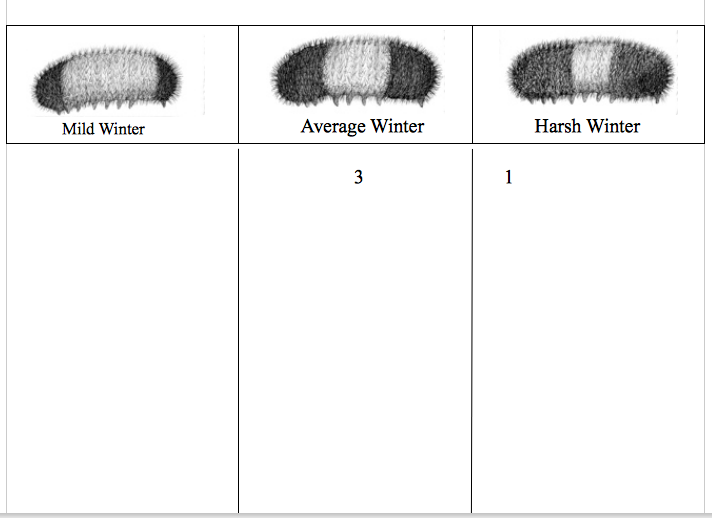
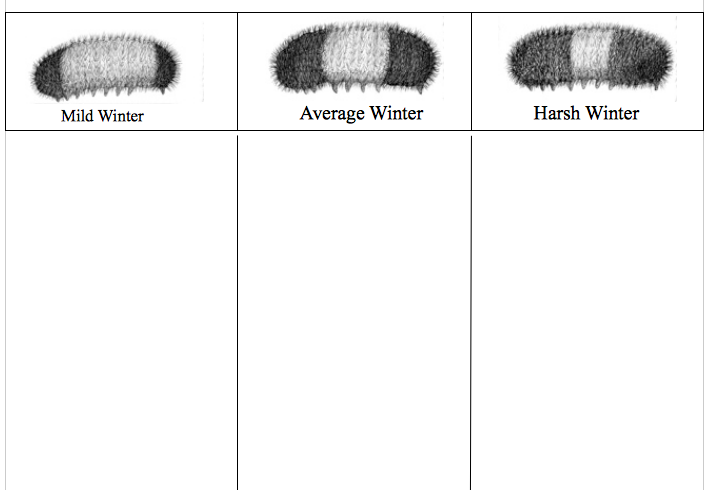
The old Farmer’s Almanac said that you could predict the harshness of a winter by observing the color patterns on wooly bear caterpillars. It was said that if the orange band in the center of the body is greater than a third of the body, then it will be a mild winter. If the orange band is equal to the size of the black bands, it will be an average winter. However, if the black band on the sides of the body is larger than the orange band, it will be a harsh winter. Yesterday, I saw a wooly bear that was all black, and today, I saw one that was all orange.
Procedure:
This study can be an aspect of the Wooly Bear Week study (posted earlier). If a student brings in a wooly bear, students can check the size of the orange and black bands and predict the winter based upon their observations. However, older students can report the color pattern they observed and leave the animals in their natural habitat. Below is sample chart that shows the different patterns. My class has shared our data with local TV stations and they are always interested in a new angle on the weather.
In 2011, from mid September to mid October, I did not get many reports of wooly bears. My sample size was too small (14) to make any dramatic statements about the weather this winter. However, I thought the comments posted by Paul Larson on wooly bears was very interesting.
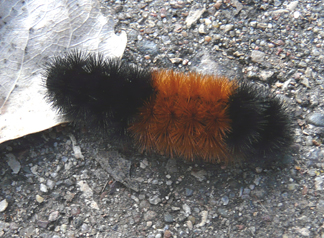
Wooly Bear
Over the past week, I have seen 4 wooly bears crossing the trail or hanging out on some plants. This is in spite of the fact that I have spent most my daylight hours teaching school. Wooly bears are fuzzy caterpillars and tend to appear in great numbers when the weather gets
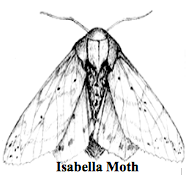
Isabella Moth
warm in the fall. They are the caterpillar of a small white moth known as the Isabella moth. Students love to handle them because they are so fuzzy. In late September, I start looking for wooly bears in my neighborhood. If it is a warm weekend, you and your family are likely to see them on hiking trails. If you are a teacher, students can start bringing the wooly bears to school in a container with a lid. Wooly bears eat small weeds and one of their favorites is plantain, a common lawn weed.
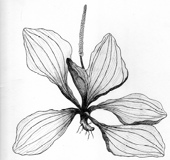
Plantain
Wooly Bear Week should begin when they are most plentiful along the trails. There are many studies that you can do with wooly bears in the classroom. You can record your observations in a nature journal.
What do wooly bears like to eat? Go outside and collect some plantain from the lawn as well as several other weeds. Put them in the containers and leave them over night. What weed did they prefer?
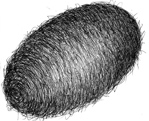
Wooly Bear Cocoon (Reddish-brown/one inch
Wooly bear races: Line up the wooly bears in the center of a circle and see which one gets to the edge first.
Do wooly bears prefer light or dark places? Create an environment to test this question.
At the end of the week, the study will be completed and wooly bears must be returned to the place they were found.
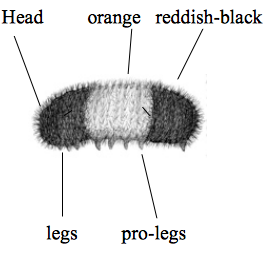
Body Parts of a Wooly Bear
Graphics by Jeanette Dickinson
I must have been 8 or 9 years old and I was exploring Sespe Creek. I saw a bird I named the “whopper” because when it was frightened, it made a call of “Whop-Whop”. I really wanted to know what its name was, so I decided to try and get a photo of it and then show it to my teacher. My parents had a Brownie Reflex Camera that I began taking down to the creek with me. The Brownie Reflex was a simple camera of the 1950’s. It was a 20 mm wide-angle camera and took only black and white film. The only way I could actually look at a picture, was to get it developed at the camera store (all of which are out of business  now). Since the camera had only a 20 mm lens, it meant that I would have to be 10 feet from the “whopper” before the bird was visible in the picture. Fortunately I did not know that at the time and became obsessed with trying to get a photo of the bird. Its “fright distance” was about 50 feet, so it took off before I was able to see it in my view finder. But in the mean time, I discovered plenty of things at Sespe Creek that I didn’t know existed. I saw muskrats, blue herons, turtles, canvas-backed ducks, kingfishers and other beautiful creatures.
camerapedia.wikia.com/wiki/Kodak_Brownie_Reflex
One day, I came to one of my favorite spots on the creek and there was the “whopper” right in front of me. I snapped the photo and the bird took off. I couldn’t sleep that night because I was so excited, and brought my film into the camera store. It took a week for the film to be developed and returned to the store. When I paid for the black and white pictures, the photo of the “whopper” was not in it. I searched the negatives and found one that looked like it had a small dot in the background of the picture. I begged the owner of the the camera store to develop it for me, even though he said nothing would show up. I waited another week for the photo to come back, and when I finally got the photo, there was a small fuzzy blob in center of the picture. I think that was the last day I took the camera with me, but by that time I was hooked on the wonders of Sespe Creek.
I didn’t do any more photography till I was 18 years old, when my parents bought me a Nikkormat camera with a 70-230 zoom lens. I used this camera primarily on ships photographing dolphins and whales that were near the boat. It was a heavy camera and tough. I dropped it on the deck of the ship several times before it finally wore out.
In the last ten years I have become very serious about photography again, using photos for work. I have re-learned some of the things I learned when I was a kid at Sespe Creek.
In the last five years, my daughter, Alli has taught me about paying attention to light, and how the beauty of an ordinary object can be brought out in the correct light. Sometimes backlit objects can give a whole new perspective on something you are photographing.
Today, I carry a camera with me where ever I go outside. Most of my best photos come when I least expect it. For instance, the underwater photo I took of the painted turtle who swam right up to me; or the broad- wing hawk that was eating a bird as I drove by. If I don’t bring a camera, I can count on seeing something that would be a great shot, like the kingfisher on the wire that I saw yesterday, or the two species of egrets that were fishing side-by-side.
Today, I have two cameras that I use and think they are spectacular.
A good part of my life has been about photography. A camera has helped me slow down and find the beauty in the moment. This tool has helped me realize who I am, and what is important to me. It all began with the Brownie Reflex.
For more info on the Brownie Reflex Camera:
http://www.brownie-camera.com/
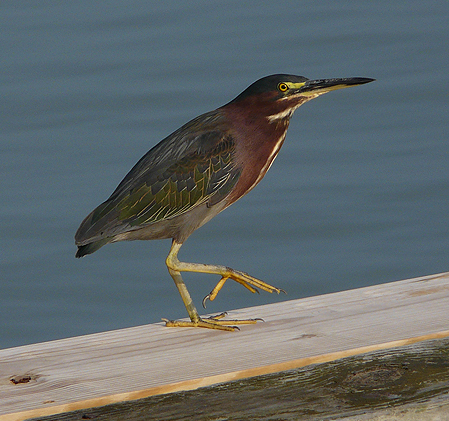
The Whopper
I finally got my photo of the “whopper” (a green heron), but it was 50 years later.