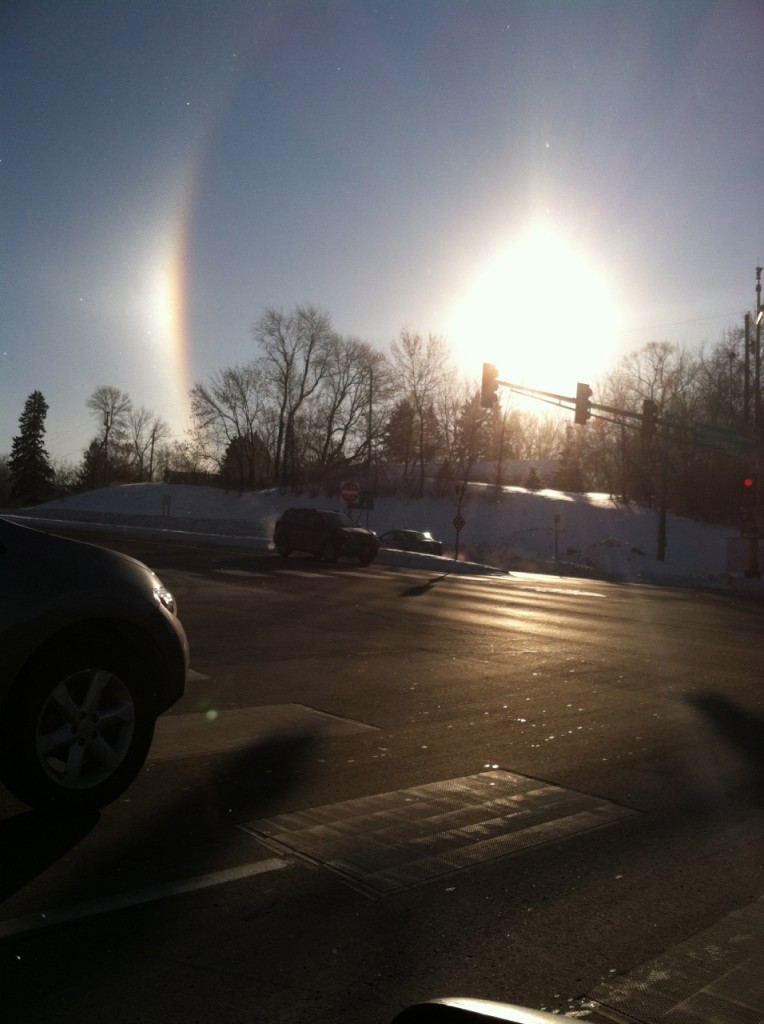
We can not predict climate change (global warming) by studying local weather patterns.
Thanks to Dr. Lee Frelich, Director of the U. Minnesota Center for Forest Ecology for contributing the graphics and making editing suggestions.
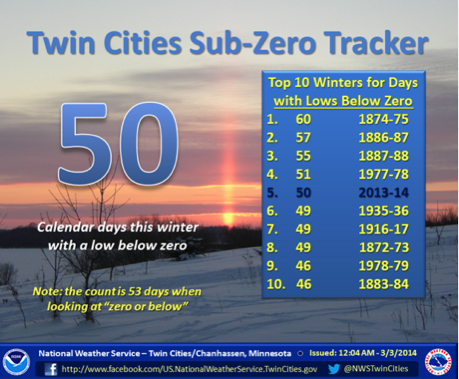
Are you thinking what I am thinking? There is no global warming in Minnesota. After 50 days of sub-zero weather this winter, who wouldn’t be thinking this?
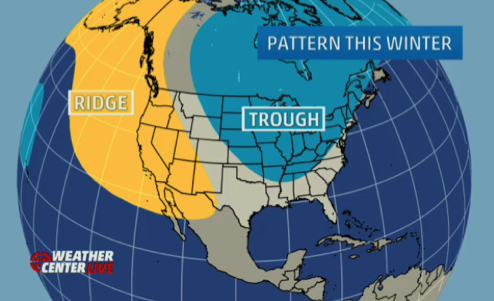
In the graph below, the light blue area (labeled “Trough”) shows the Arctic cold temperatures that much of the Eastern United states experienced this winter (2013 and 2014), while the West had above average temperatures (labeled “Ridge”) and parts of California experienced record warm temperatures.
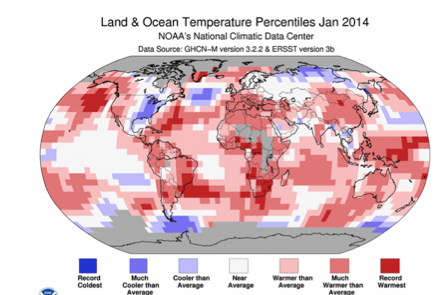
The reddish areas in the graphic below shows where temperatures were warmer than average in January, 2014. While purple shows locations where temperatures were colder than average. It doesn’t take a rocket scientist to notice that there is a lot more red (warmer temps) than there is purple (colder temps) on the graphic below. In fact, world-wide, it was the 4th warmest January in 134 years of record. On January 6, 2014 the high temperature in the Twin Cities was -12° F. On Jan 27th the high temperature was -6°F in the Twin Cities while the high in Nome, Alaska climbed to 51° F. We can not predict climate change (Global Warming) by studying local weather patterns. Climate change is a global phenomena and we need to look at the temperatures of the Earth as a whole.
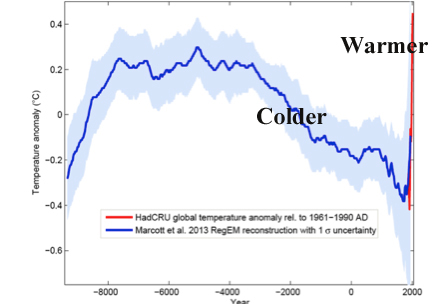
 The graphic below shows temperature change over a 10,000 year period. For the last 5000 years the temperatures on the earth has been getting cooler. But roughly 50 years ago the temperatures began to spike (red line). The graph uses the term temperature anomaly which is the difference between the long term average temperature and the temperature of a given year. So if the temperature was colder than the long-term average, the trend line is below the zero point on the left axis, and if the warmer than the long-term average, the trend line is above the zero.
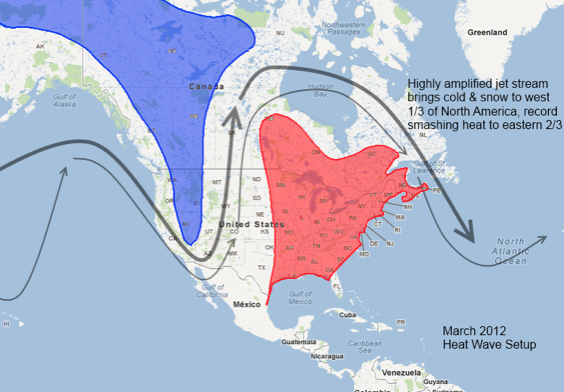
 Does anyone remember March 2012? The entire month was warm and the earliest 80°F temperature ever recorded was on March 17th. Was this a sign of global warming (trick question)? Answer: you can not predict global climate change based upon local weather.
In March of 2012, the jet stream was positioned so that there was record heat East of the Rockies and cold to the west of the Rockies (graphic on the right).

Magnolia’s blooming in March, St. Paul, MN, 2012.
Photo by Jenna Williams
Graphic by Dr. Frelich, U. MN
If nothing changes and global warming continues unabated, Dr. Frelich predicts that Minnesota’s summer climate will be more like Kansas and Nebraska by the end of the century. As a result, there could be a 300 mile northward range shifts of habitat (graphic below).
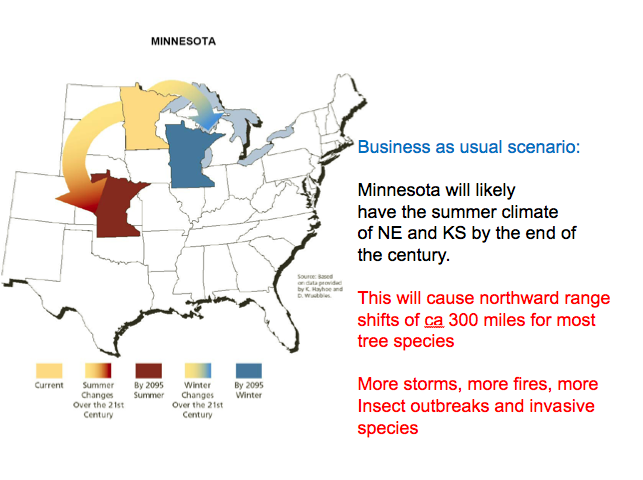
Graphic by Dr. Frelich, U. Minnesota
If global warming goes unchecked, there will be winners and losers. Tree species in the Boreal community will disappear and moose and lynx will no longer be found in Minnesota.
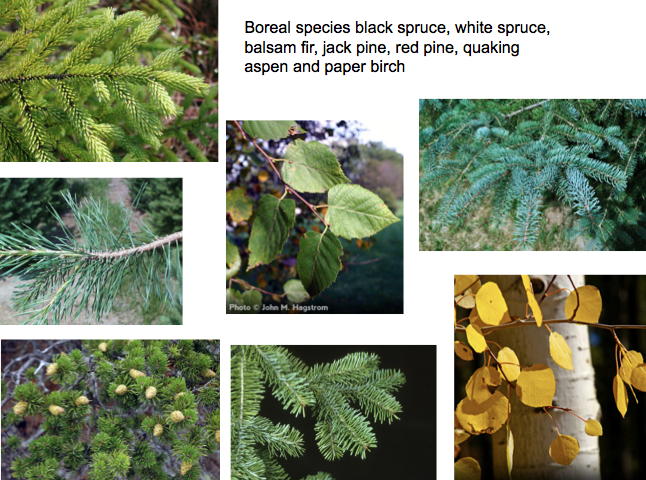
The boreal community will no longer exist.
Graphic by Dr. Frelich, U. Minnesota
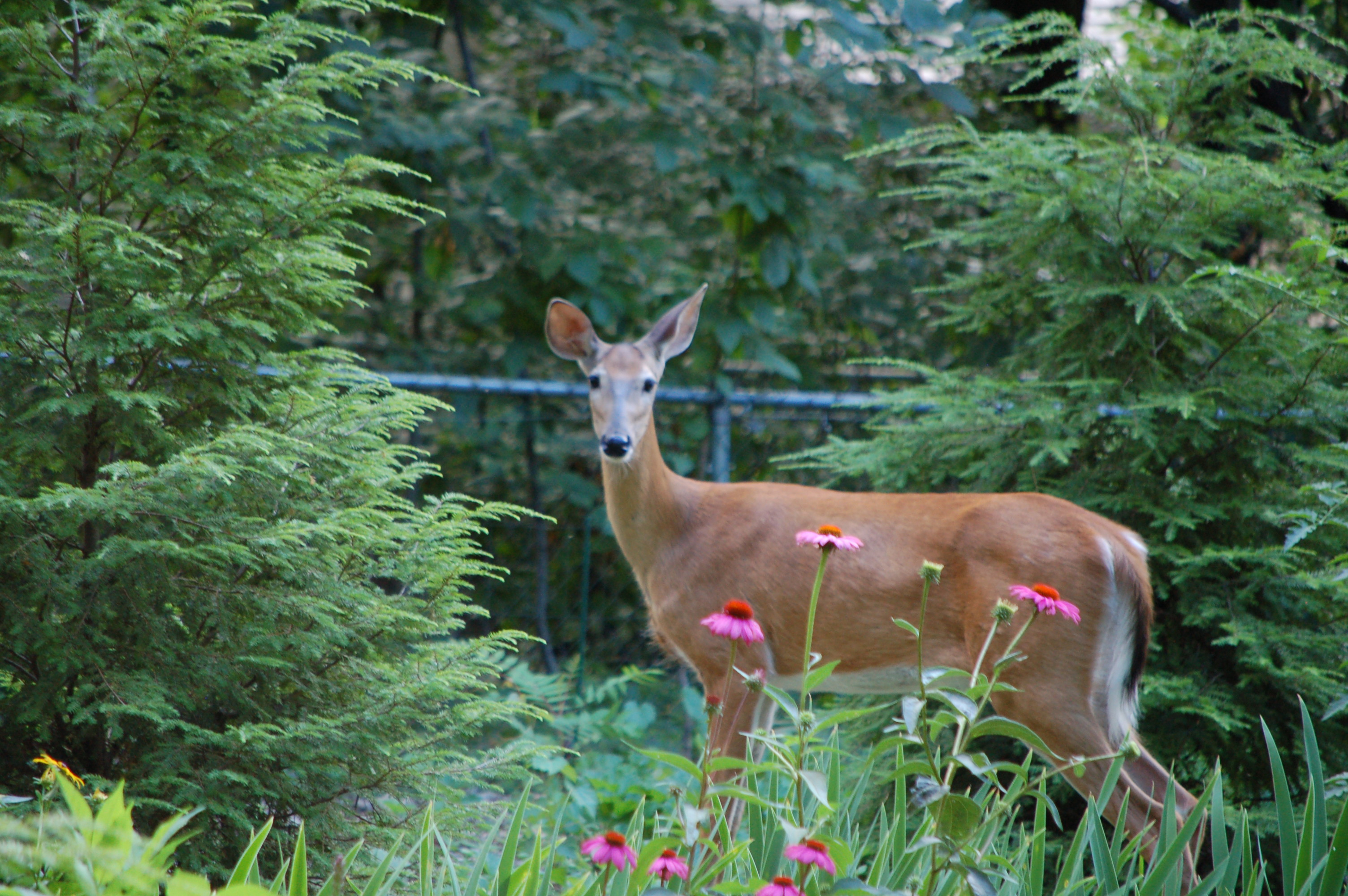
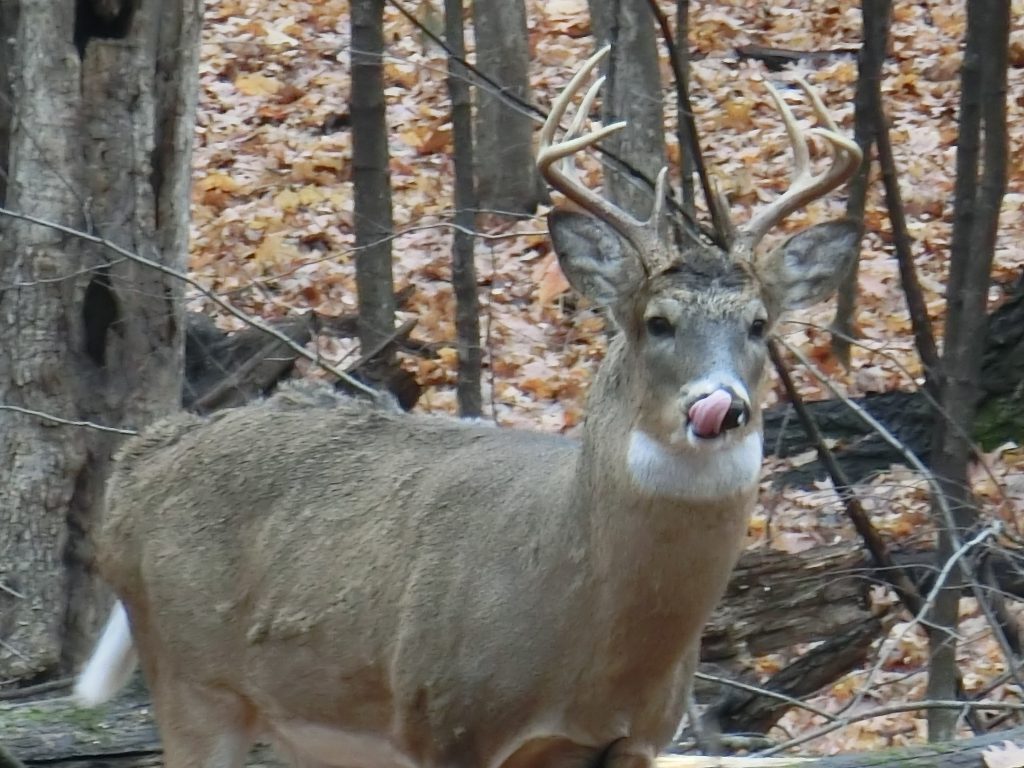
New species of trees will take the boreal community’s place. There will be more deer, wolves, and bobcats.
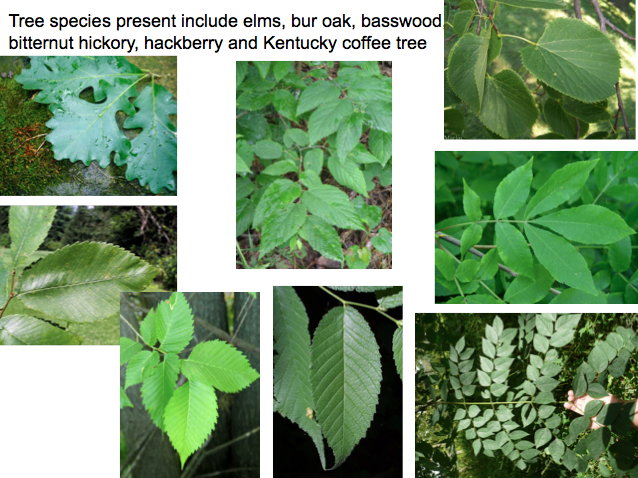
This is not the kind of legacy that we want to leave our children and grandchildren. There is a lot that we can all do individually. If you are compelled to make a change in your life style and want to be part of the solution, go to the following links:
10 personal solutions to global warming:
http://www.ucsusa.org/global_warming/what_you_can_do/#Take_Personal_Action
10 solutions to climate change:
http://www.scientificamerican.com/article/10-solutions-for-climate-change/






 The issue here is not just about dog poop. It is more about caring for our wild spaces. When we are out for a walk, are we conscience of the land and the parks we value so much?










 Have you been letting a negative attitude dominate your emotions this winter? It is easy to understand how that could happen with the sub-zero temperatures we have been experiencing; the lack of sunlight; the daily news; the destruction of our environment; etc.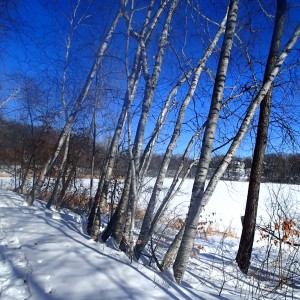
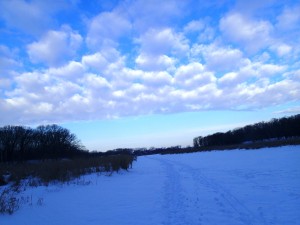
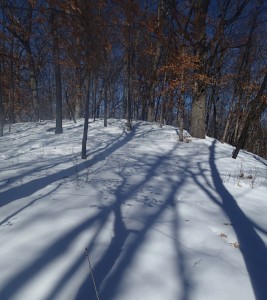
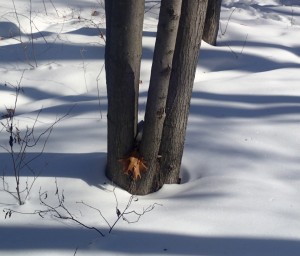 Jed Krauss explains “listening to silence” in this way: “I feel the silence of nature more like a touch (like when a sound wave vibrates through my body). There are other times when I’m just too addicted to my own thoughts to listen. For me, listening to the silence is the most rewarding type of meditation. More than just quieting my mind, this is opening my self up to be touched by Creation, in whatever way it chooses.”