Transforming Our Lawn into a Living Laboratory

A Special interest article by Kathy Adams

“… like friends, they have become so much of who I  am.  It is hard to separate them from who I have become because of them”. Kathy Adams
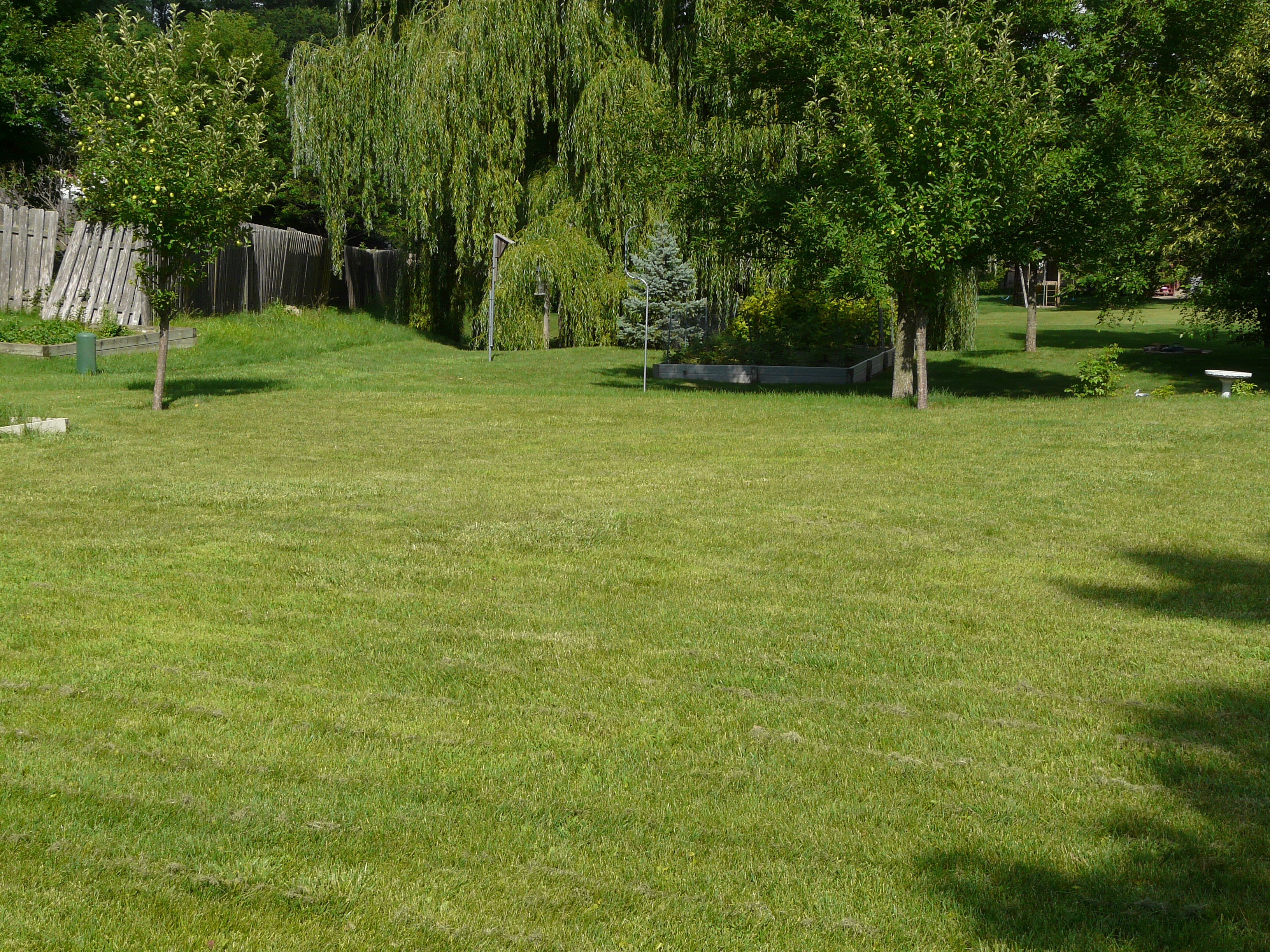
What our backyard looked like.

What our backyard looked like when we moved in.

Perhaps people think it is too difficult to establish a friendly yard, or maybe simply don’t know what to do. They may believe it takes too many resources. If they come to see a yard like this one, that is not perfect but in progress, evolving, yet with bees, butterflies and dragonflies, birds, and lovely flowers, they can try a little at a time, too. Sure there is grass and there are unwanted plants, but so what, at least it is safe to come here and hang out! And there are flowers to drink from, a bird bath, some seeds in feeders, and people working to make it better.
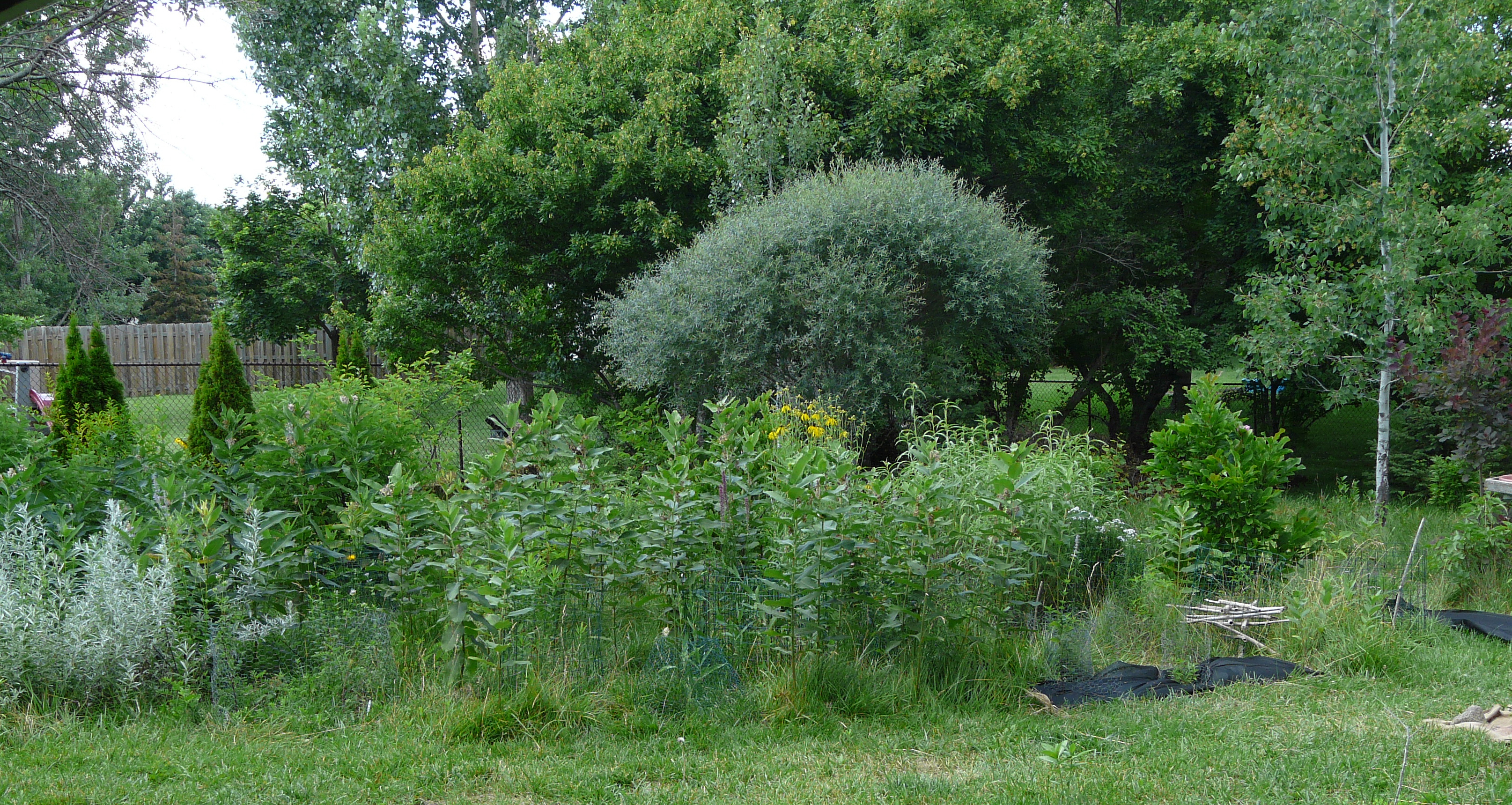
Our backyard today.

Our backyard today.

The first step is to let go of perfect grass, and stop spraying. Then the magical world out there can come in and change your heart, so you can see up close how much power you have to let the little ones survive and thrive. You will start to bond with those sweet spirits.  Begin to care about their well being and experience the joy of Nature.
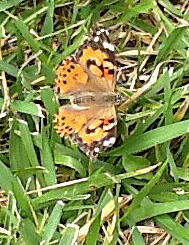
Painted Lady

Painted Lady

In the summer of 2002 we set out to find a smaller home in a sunny place not far from Deephaven, MN. That was the place where the shady sugar maples reigned, towering overhead, causing evening to come way too early in the summer and the mosquitoes so thick we sat wrapped in sheets and head nets in the heat of summer. Although the deep woods mysteries – raccoons chattering in the dark outside our  bedroom windows – the ancient calling of the pileated in the shadows – the deer quietly moving on the hillside paths under the moon and my little children running about to catch fireflies in the dark, so thick it was as a million stars had fallen from the skies, the woods had become my home here in the city and I longed to feel at home again.

The suburban lawn was bright green and the sun shone on a third acre of grass as we walked up the driveway that August day, We bought the house, moved in, and  I began my plan to return the land back to a living ecosystem alive with plants, trees, shrubs, snakes, bugs, birds, frogs and whatever else wanted to join us. Since then the journey has become a part of me, changing how I look at the world and my place in it.
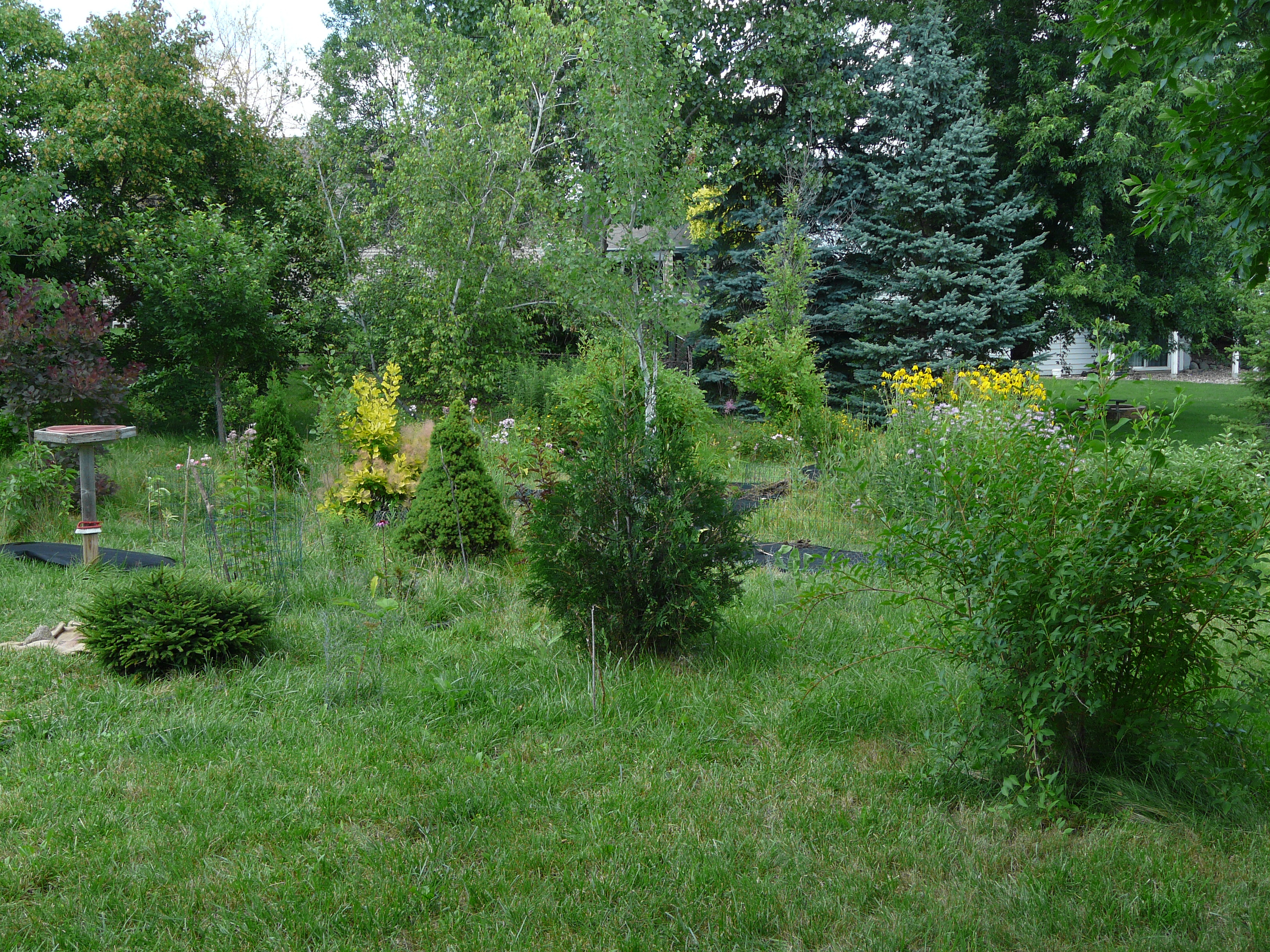
P1100180

The view looking to the west.

The original plan was to create three triangles, each with its own niche. The one to the east is sunny with a hill that slopes down. On the hillside would be big blooming shrubs, dogwoods, wild roses, elderberry, viburnums and a big patch of native prairie to become my nursery for spreading out into the rest of the area. The middle triangle is where the lilacs, cherry trees, bird bath, hydrangeas, chokeberries, winter berries grew. Some are still with us, others have met their
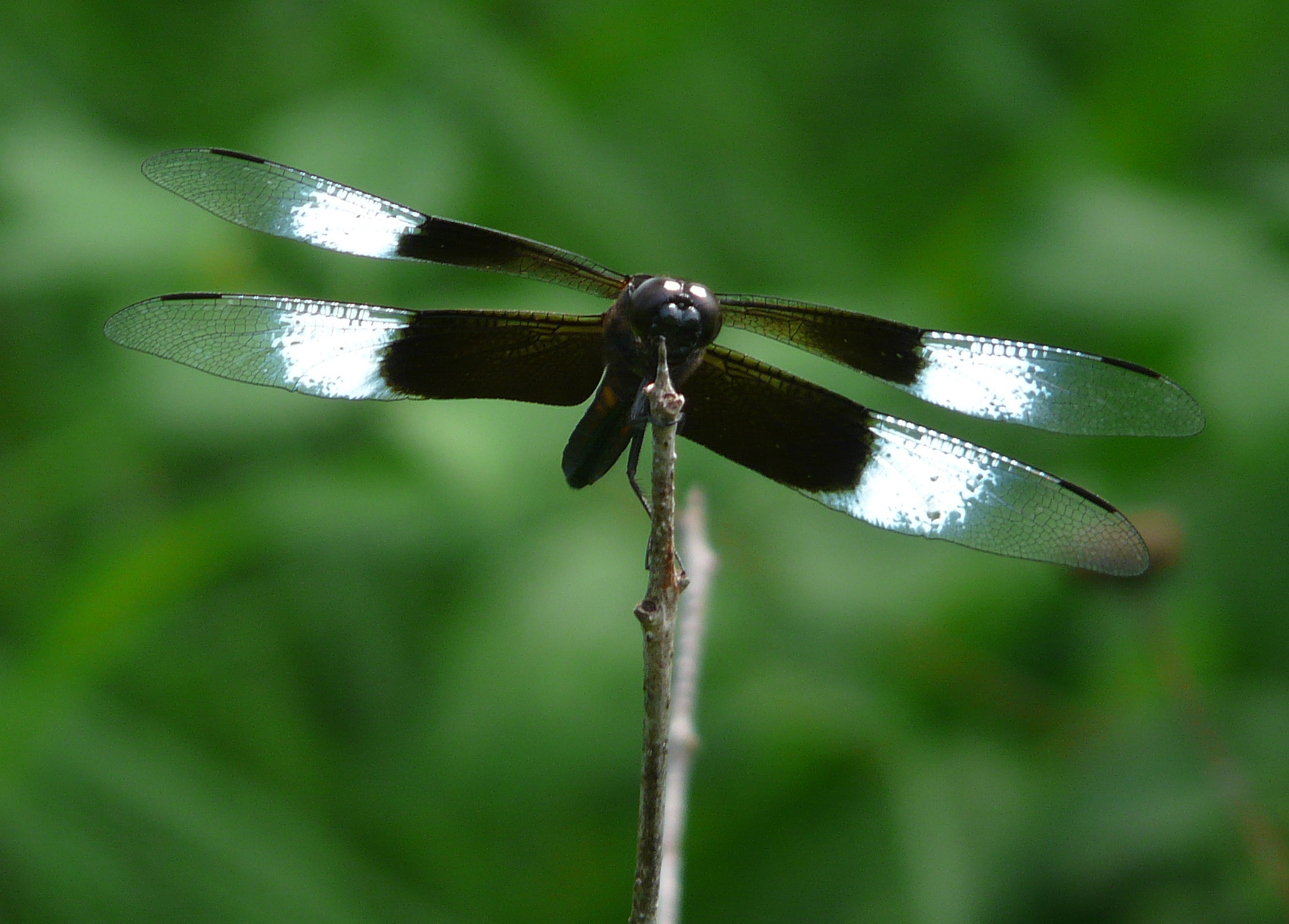
Widow Skimmer

Widow Skimmer

demise at the hands and mouths of the locals (smiles and curses to the rabbits and deer).  Newer members of the community are Joe Pye, Cup plants, monarda, coneflowers, aster, whorled and poke milkweed and many dragonfly perches we made out of tall sticks. The dragonflies keep life glistening with their antics and I believe they fly out to see us as soon as we arrive to wander the paths. There is a bee nest there, too, and Old Naturalist gave us many plants and the idea to create the bee home out of dried hollow reeds. We wait, hoping the hotel will have guests.

Tubes for cavity nesting bees.

Tubes for cavity nesting bees.

The triangle to the west is shady, with a half dead ash that provides wonderful perching spots for the huge family flocks of birds that make their way to the yard – a big stick pile sits in the back of a row of thick maples, the milkweed those proud soldiers stand waiting for monarchs, and the milkweed community – fragrant, friendly milkweeds – with a scent more luscious than lilacs and certainly each one with its own personality – but all in common are proud to bear the complex community that thrives within their protective haven.
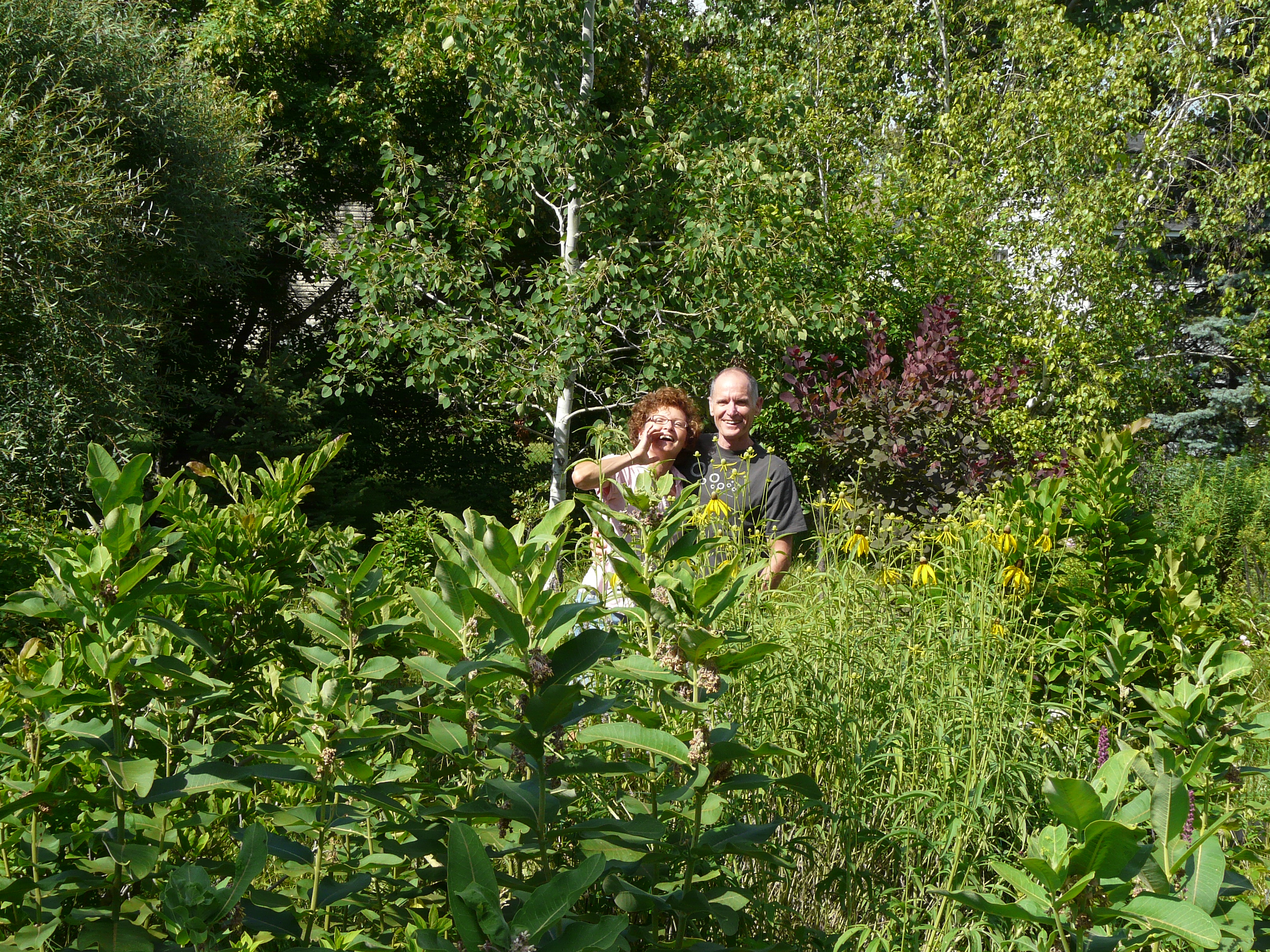
P1100186

Kathy and Denny in front of the aspen forest.

I leave out many other important members, perhaps, like friends, they have become so much of who I  am  it is hard to separate them from who I have become because of them –  the aspens whose community started out as 5 young trees, to be whittled down to three over the years, and now they all have reached out with one after another to form a complete grove of fluttering leaves, working to restore that desolate, poisoned, sterile turf that once shown Crayola Green under the midsummer sun. Now, underneath them, the dragonflies and little toads make their homes, dear rabbits hide and watch with wondering eyes, nibbling on dandelion leaves fresh with dew. A willow tree waves in the breeze within the aspen grove, and many native shrubs, this is the shady part where one can wander the path on a hot day, kneel down and wonder at the dragon flies, bees, and creatures that flourish in there, watching them , looking up into a world so marvelous that one can only imagine.
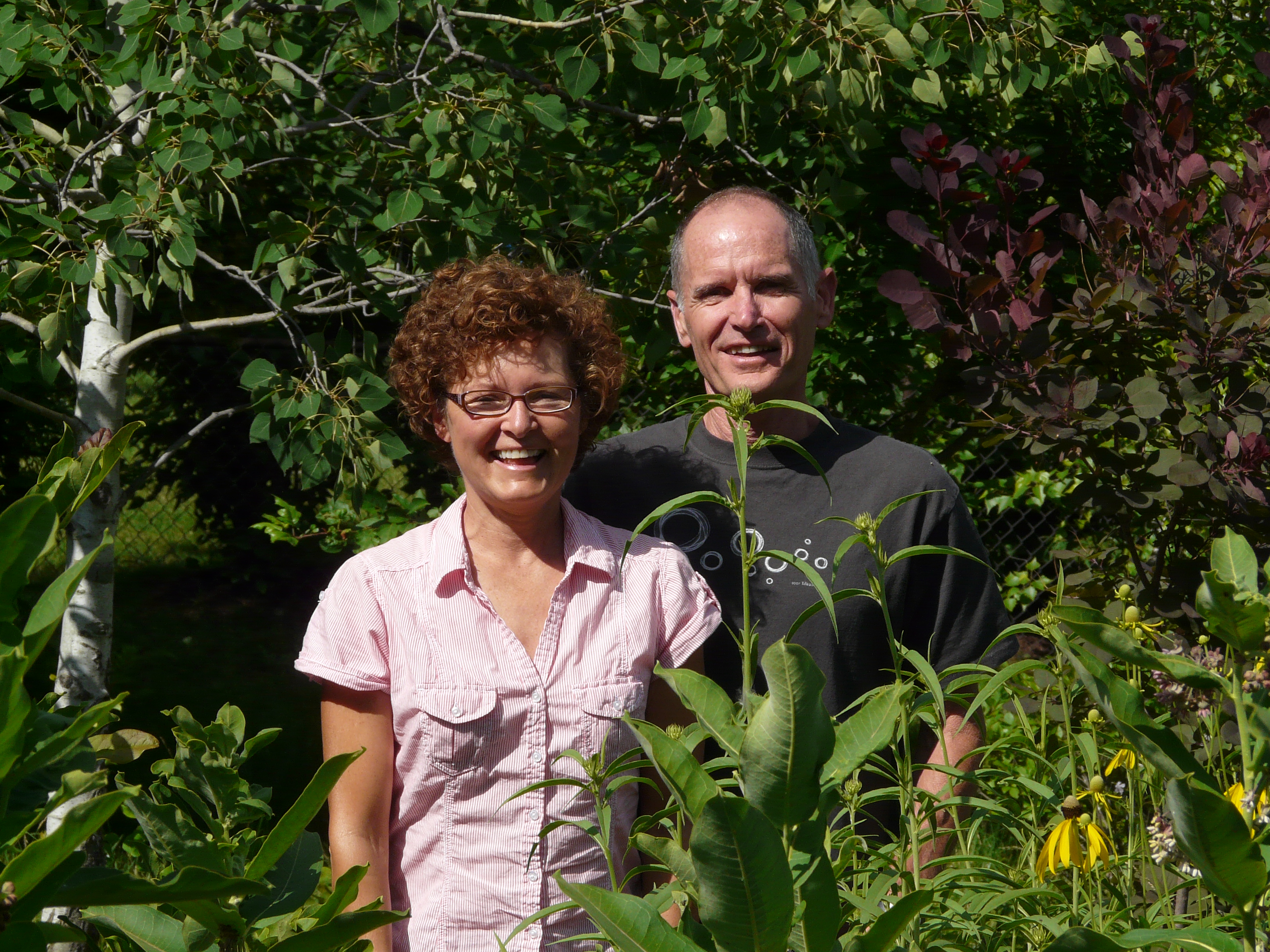
Kathy and Denny Adams

Kathy Adams and Denny Jordan

This is the beginning of a restoration that began with a field of grass, and evolves every day into a richer universe, thriving with each new member that joins the community – plants, always more plants, native plants, shrubs, is there room for another tree? Another bird feeder? Can I let that little milkweed grow or should the roses be given more room…is there room for more? The land is recovering and although it stands alone in a desert of suburban turf, the creatures and the native plants and I have a place to call home.
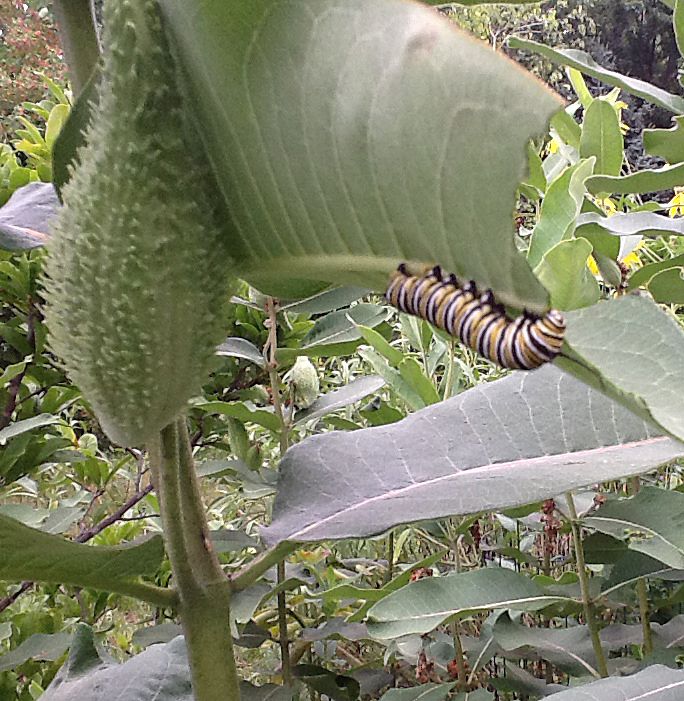
Monarch larva on the milkweed

Monarch larva on the milkweed

I have great hope that many people want to do what is right and they are aware of what they are doing with their mowing and poisons. There are many progressive folks with rain gardens, un-sprayed properties, veggie gardens,  chickens, native plants and flowers…

I hope that my property will demonstrate what others can do and that can bring the same joy to them, their families and neighbors.
Posted in Connecting to Nature, Nature Guardians, Summer | Leave a comment

Common Dragonflies and Damselflies

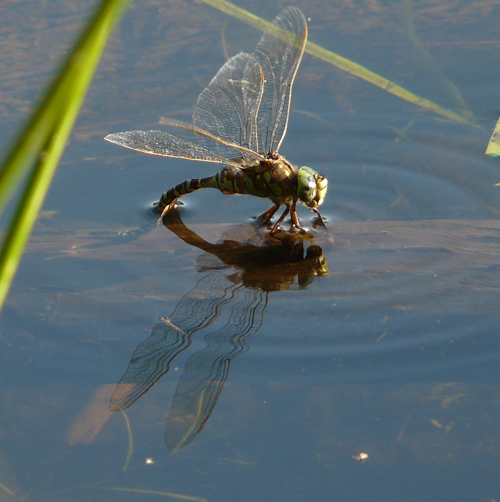
1DragonLayingEggs

Dragonfly laying eggs

Over the past summer, I have made it a goal to learn more about common dragonflies and damselflies in my neighborhood. I started observing and photographing them; bought a wonderful book titled: Dragonflies of the Northwoods by Kurt Mead and joined the Minnesota Dragonfly Society (MOSP). A new world of knowledge has opened up to me, and I have felt a lot of joy in connecting with these beautiful creatures.

A the bottom of this post is a link to a poster which I created with the help of Sam Barczak, a 7th grader at Hopkins West Junior High, Hopkins, MN and Dewey Hassig, and Julie Ikhaml both of Minnetonka, MN.

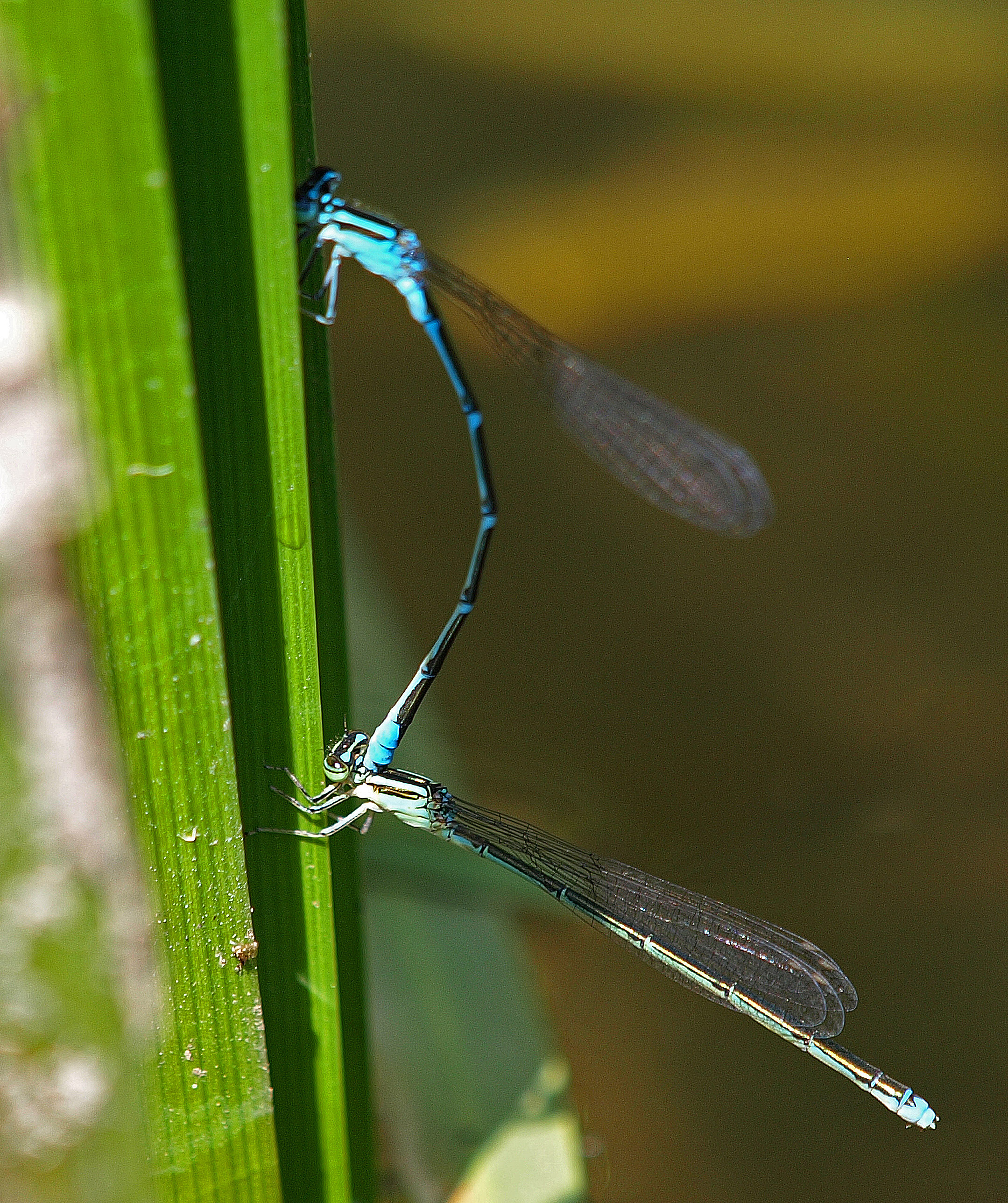
Mating Bluet (sp)  Mike Farrell

Mating Bluet (sp)
Mike Farrell


Dragonflies/damselflies  mate and lay their eggs in the water. Most of their life cycle is spent in the water as a larva ( up to two years), while the adults only live a few weeks.

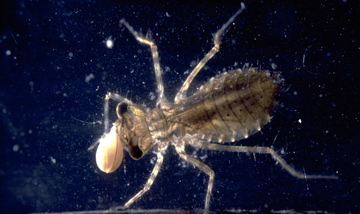
Damselfly larva

Damselfly larva

Dragonfly larva

Dragonfly larva eating a soft shell clam.


Click on the following link  to see the Dragonfly poster: CommonDragonflies


Posted in Connecting to Nature, Insects, Nature Notes, Photography/Art, Summer | 1 Comment

Our Trip to Bert’s Cabin by Curran Ikhaml


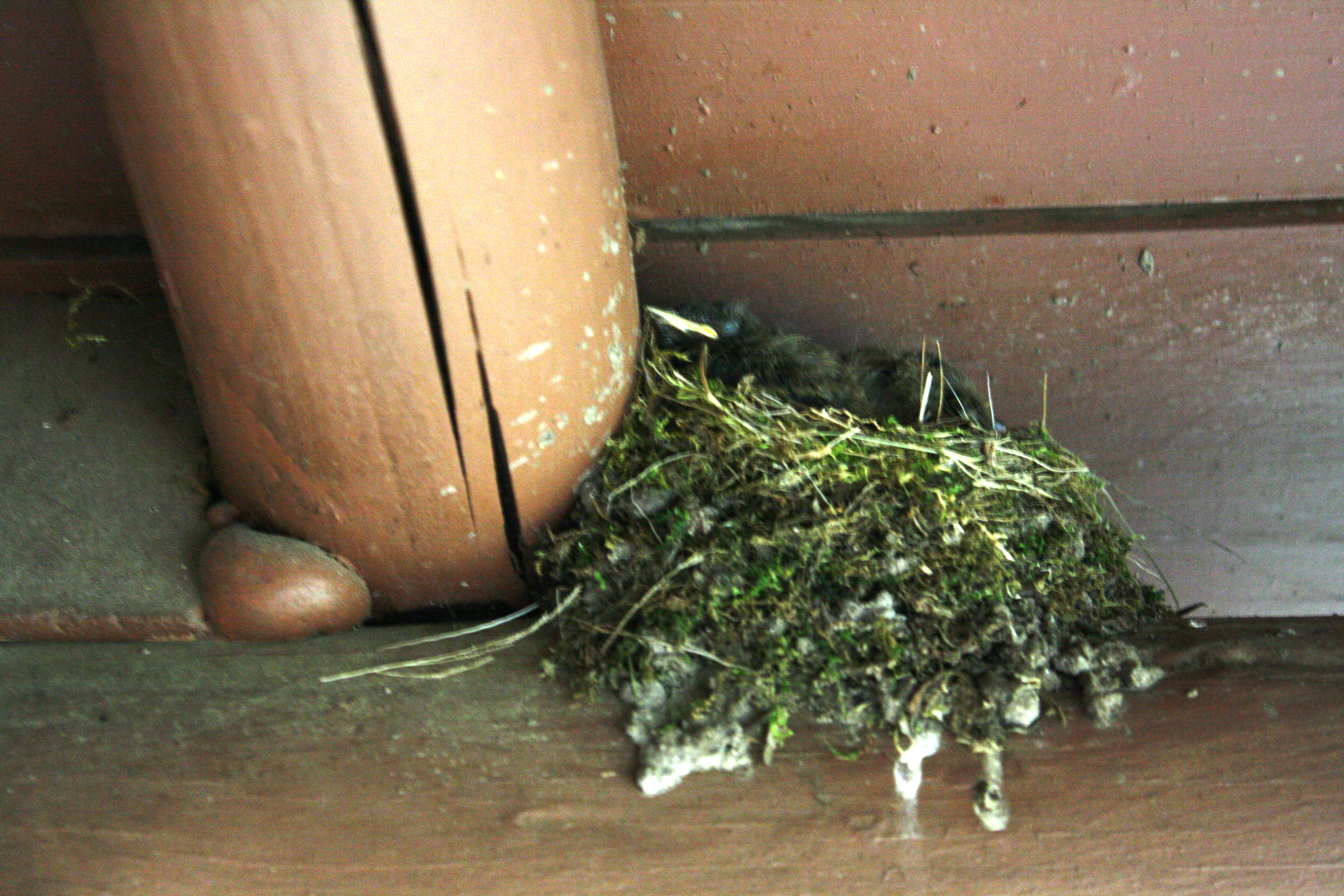
Phoebe nest

Phoebe nest with young

“My family went to Bert Cabin’s at Itasca State Park.  We saw a phoebe nest in the part that holds the cabin together.  One time we saw the phoebe with a moth in its beak for the babies in the nest.  The babies were part furry part feathery.  We heard the babies cry, they always got louder when they saw their parents with food.

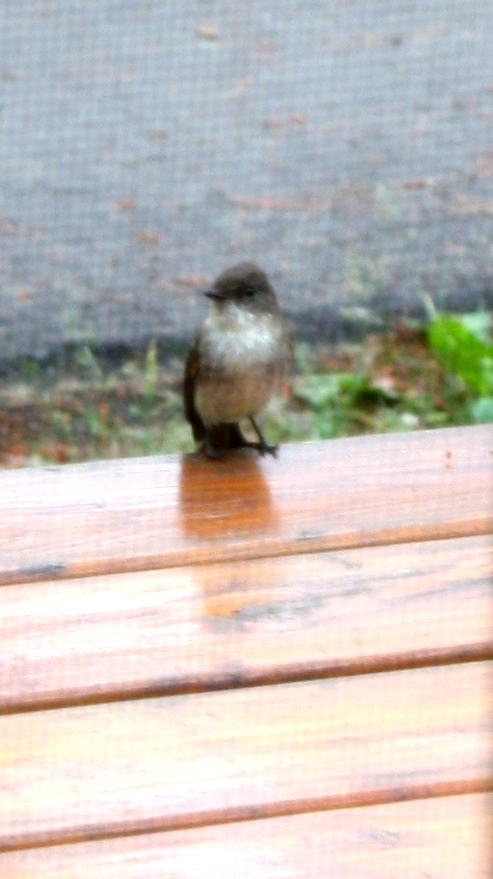
One of the adult phoebes.

One of the phoebe parents.


The two phoebe parents were very busy feeding the two hungry babies.  The parents liked to swoop their tails in circles on our stuff, like our camping chair or the picnic table that was at Itasca.”

Posted in Birds, Nature Notes, Summer | Leave a comment

Summer Time in Minnetonka

A collection of poetry and art by the 3rd-5th Graders of Deephaven, Minnetonka Explorers Club.

The following poems and artwork were created by our 3rd-5th graders who were involved with the Environment Club as well and the Drama & Poetry Club in Summer 2013. We followed the “Eight Line Nature Poem” activity from the Nature Seekers Workbook. Not all eight lines were written for each poem, but what the children created is rather magical. Enjoy!

Lisa Myers, Assistant Supervisor.         Minnetonka Explorers Club

Eight Line Poems

Posted in Nature Poetry, Summer | Leave a comment

Nature Poetry by Dr. Jedidiah Krauss

            Mayan Solstice

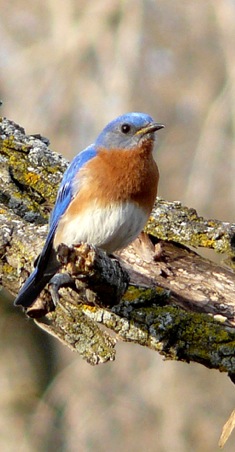
blueBird  Retrieved from the long silence

 Of mourning for the forever lost,

 A new, ancient sound is re-birthed in a sigh.

 Both the end of a whimper and the beginning of a song.

  Gestated at the end of time

  And born again with the birth of the new time.

 The freedom to be whole again is possible.

                                              Heard in the sound within the sound

                                             Of a bird singing to the dawn.

         Birthday Blessing

      May the earth be pleased at the touch of your feet

May your song mingle with the songs of birds

                                         May the winds touch softly on your cheeks

                            And may your birthday remind you how good it is to be alive.

HalloweenPennent

Posted in Nature Poetry | Leave a comment

Spring Peeper Meadow

June 26, 2013

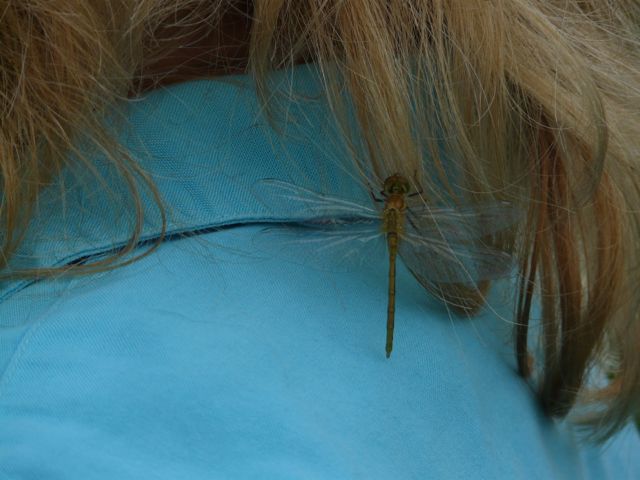
There it was on Jessica’s shirt collar, and then it started slowly walking up her hair. It was a new-born meadowhawk dragonfly that had just hatched into an adult.  We felt a very special connection between the three of us and the dragonfly. Janine got within 2 feet of it and saw  the beautiful patterning of the wing in the morning light. Then the meadowhawk lifted up and circled over our heads. We stood there watching the new born’s wobbly flight. From behind us came a fast flying tree swallow, who effortlessly grabbed and consumed the young dragonfly. Just one minute before, the dragonfly had been resting safely in Jessica’s hair, and now it was no more. I felt sad that the little guy was eaten, and did not have a chance to finish its life cycle. I felt angry at the swallow for eating the dragonfly, even though it was just trying to sustain itself or its young in the nest. But mostly I felt deeply touched to be a witness to this natural event. Death and life connected; predator and prey. It was an excellent teaching, and allowed me to see into a window that I did not know was there. There was no funeral to honor the little dragonfly. One second it was fluttering around and the next it was in the tree swallow’s mouth. Nature is a powerful force; life and death connected, always moving and changing.

DragonflyHair

Janine Pung was also touched by the experience and wrote the following poem about the morning hike.

Where Does Beauty Hide?

                                                                 in the magical meadow

in the ethereal foliage

in the splashes of color amid the green.

Where does beauty hide?

in the cricket’s chorus

in the bird’s watery sound

in the soulful silence around every corner of the trail

Where does beauty hide?

in the fragile dragonfly nymph

in the tree swallow’s swoop

in the opportunity to witness the cycle of life

Where does beauty hide?

in the bouquet of a single flower

in the grace of a dragonfly grove

in the tattered, spotted feather of an owl

Where does beauty hide?  

in the dynamic, yet peaceful energy of this wetland


Posted in Insects, Nature Notes | 1 Comment

Lone Lake Photography Fieldtrip

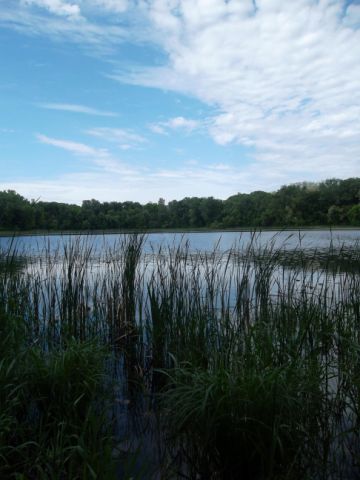
On June 12th, at Lone Lake Park, Minnetonka, Simone, age 8, documented our photography field trip for Nine Mile Creek Watershed district. Simone has a a “photographer’s eye”, and the more photos she took, the more she connected with nature.

June 12 1

Lone Lake cattails with friendly clouds over head.

Continue reading

Posted in Photography/Art | 1 Comment

Nature photography for kids

A great way for kids to connect with nature is through the photography door.  You won’t need a big telephoto lens on your camera because sightings of wildlife are infrequent. Any type of digital camera will do, however, a camera with a macro lens (for close-up shots) can be invaluable. If you want to learn more about my experiences as a kid with a camera, go to page 81 of my book Nature Seeker Workbook.

What to do on photography hike.

1. How many kinds of beauty can you find and photograph? You may see beauty in the trunk of a tree; moss on a rock; or a unique-looking insect. The possibilities are endless.

2. Look for patterns in nature: You may find patterns in a group of aspen trees; a cattail marsh; the growth pattern of ferns; or in even in a leaf.

3. Insect photography: From July to first frost, you can get some great photos of butterflies, bees and beetles. If you have macro lens on your camera, it will allow you to get some close-up photos. If you try to photograph butterflies, you’ll need a telephoto lens to get a decent photo. To photograph insects in flight, like bees and butterflies, you’ll need to put your camera on a high speed setting. Continue reading

Posted in Photography/Art | Leave a comment

Pebbles, Sand and Silt

Boulders, stones-pebbles-sand

F               G                     C
Boulders, stones-pebbles-sand
C
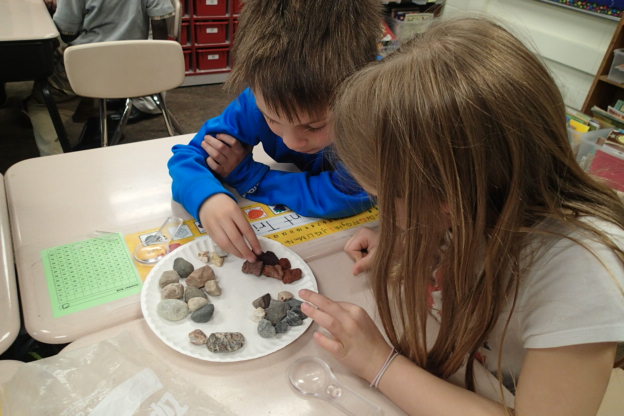
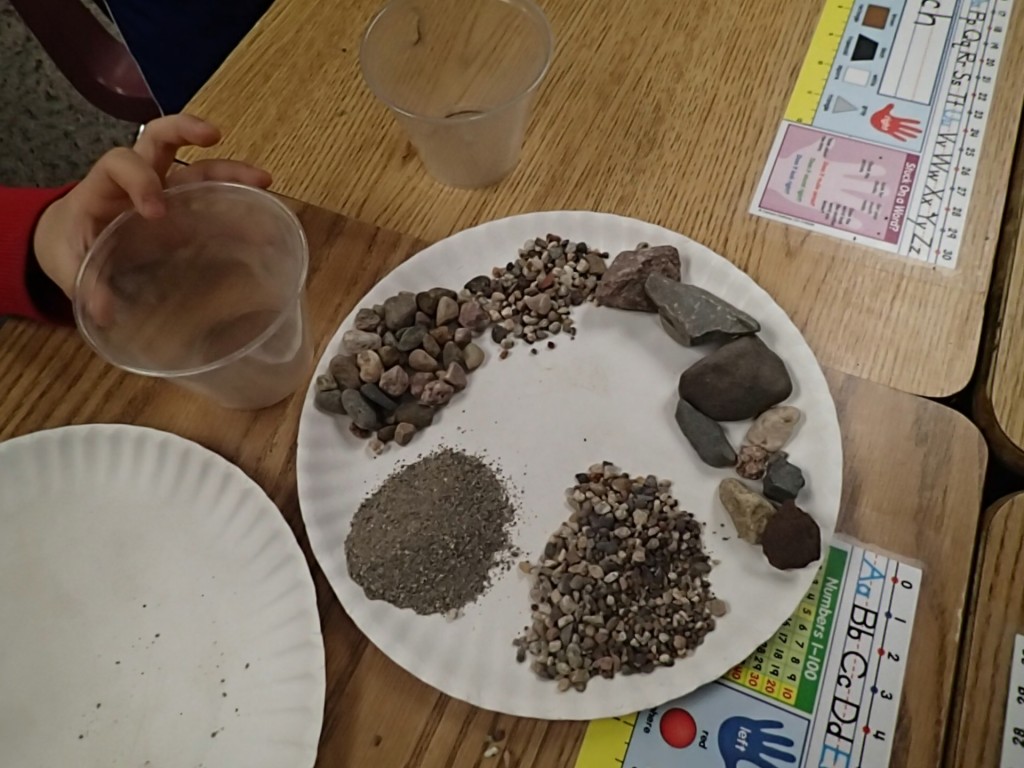
Sort your rocks
F                         G
color, shape, or feel   Yea, yea
F                    G             C
Sort by color, shape or feel
F               G                       C
Boulders, stones-pebbles-sand
C
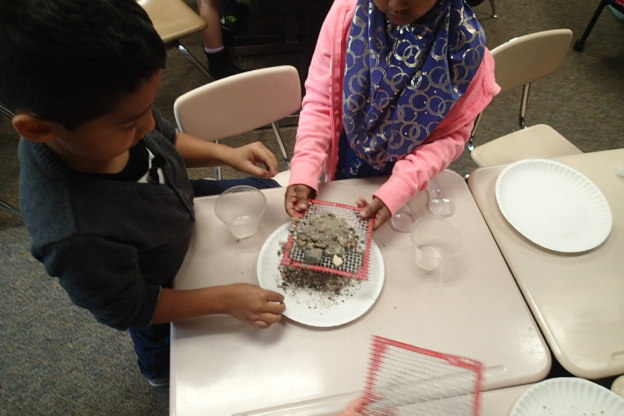
Separate them with a screen
F                                    G
And put them into groups
F               G                       C
Boulders, stones-pebbles-sand
C
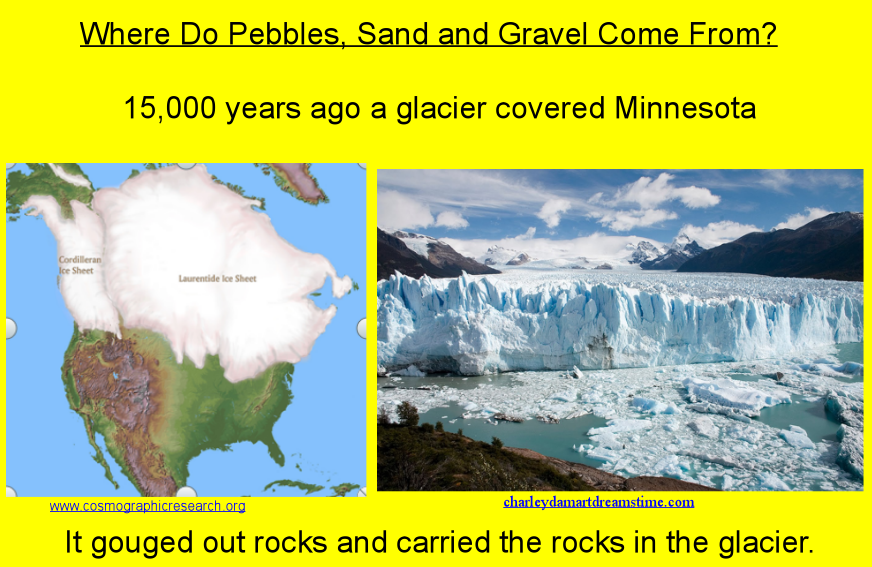
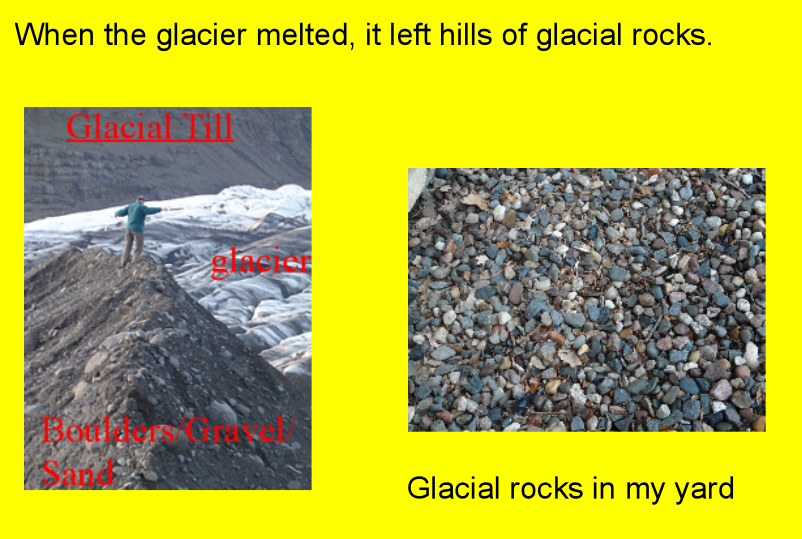
Identify those glacial rocks
F                                    G
Agates, chert, and quartz
C
Rocks found in your town
F                           G
Go outside and look around
F               G                        C
Boulders, stones-pebbles-sand
F               G                       C
Boulders, stones-pebbles-sand


Properties of Rocks – Experiment 2 Sorting Rocks
OLYMPUS DIGITAL CAMERA

OLYMPUS DIGITAL CAMERA

Chant

What is erosion?  (class repeats)
Erosion is the wearing away of rocks
Into smaller materials
Erosion is caused by the wind, rain, rivers and the oceans.

Chant
Boulders are eroded into stones (class repeats)
Stones are eroded into pebbles
Pebbles are eroded into sand
Erosion is cause by the wind, rain, rivers and oceans


Screen Shot 2015-05-21 at 7.43.18 PM
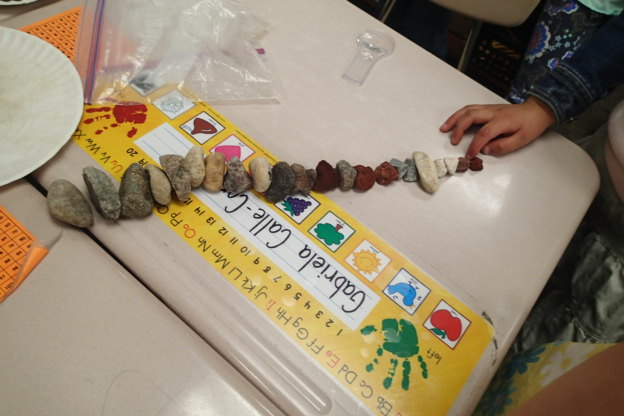
Screen Shot 2015-05-26 at 9.07.45 PMExperiment 4   Sorting Glacial Till by Size

OLYMPUS DIGITAL CAMERA

OLYMPUS DIGITAL CAMERA

Screen Shot 2015-05-21 at 7.44.03 PM


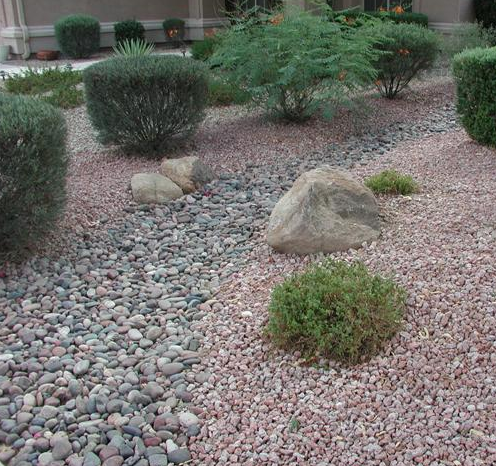
Landscaping with rocks

www.mymagicelves.com

www.mymagicelves.com

Posted in Student Resources | Leave a comment

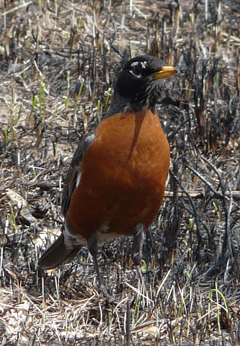
5 Minutes With a Robin


robin


How many robins have you seen on the lawn, but never really watched them?
In five minutes you could learn a lot about robins, and probably end up having more questions than answers. Possibly you’ll notice that a robin cocks its head to one side? Is it listening to worms moving underground or is it looking at something? On a piece of paper make a map of the movements of a robin on your lawn. Continue reading

Posted in Connecting to Nature | Leave a comment