Natural Playgrounds

camillephoto


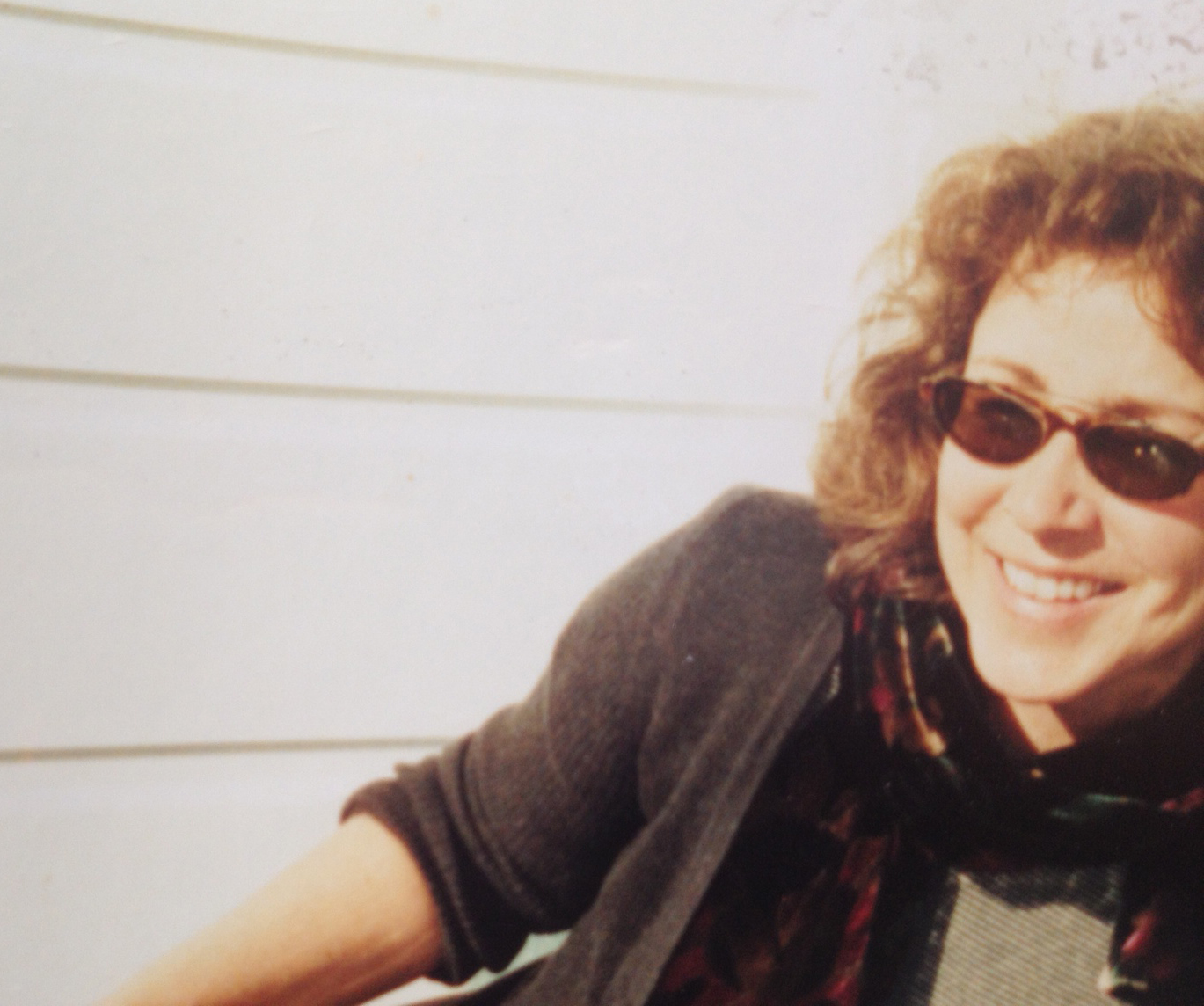
Special interest article by Camille Calderaro, founder of Fireflies Play Environments.


leeCreek1


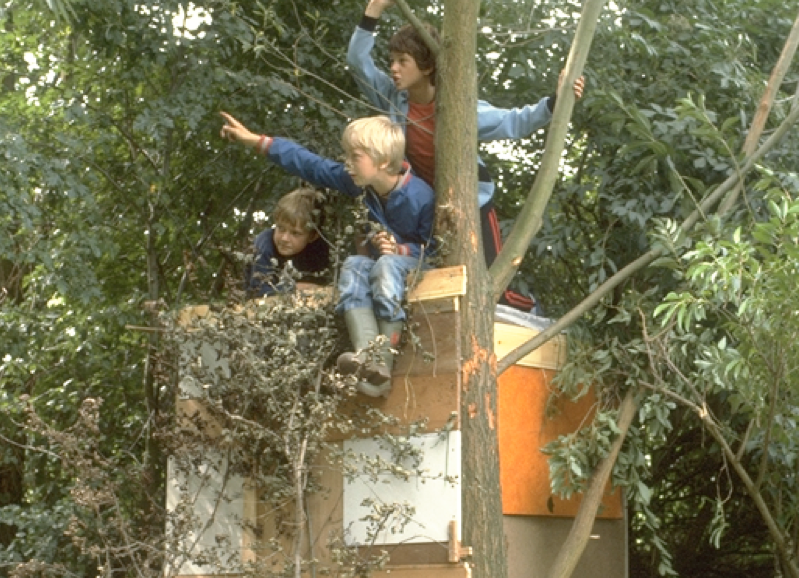
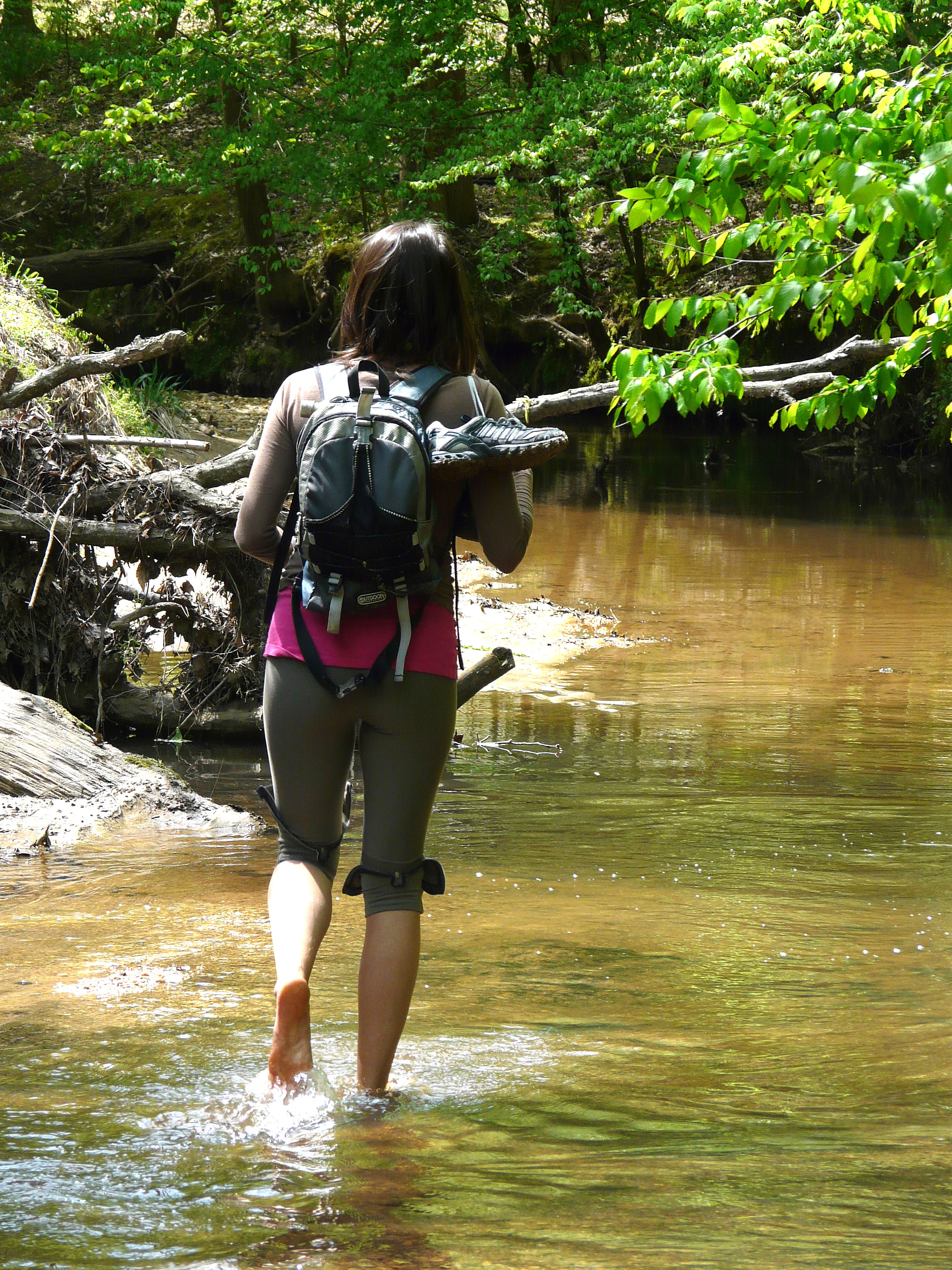
I grew up a “free-range kid”, exploring and building forts in the arroyos of Arizona and the ravines of Northern California.   Natural playground elements are re-creations of those favorite, magical outdoor environments we treasured as children. They are those places that engaged our senses. We discovered special places to dream and gaze as clouds floated through turquoise skies. We had a relationship with the earth.     Natural playgrounds, whatever form they may take, are elemental to our children’s whole development into fully realized adults; there in lies the stewardship of our planet. “We are nature”. We want to encourage the un-plugging of our children’s lives by simply opening the door to explore the secret worlds in their own backyards.
Screen Shot 2013-12-18 at 4.31.51 PM

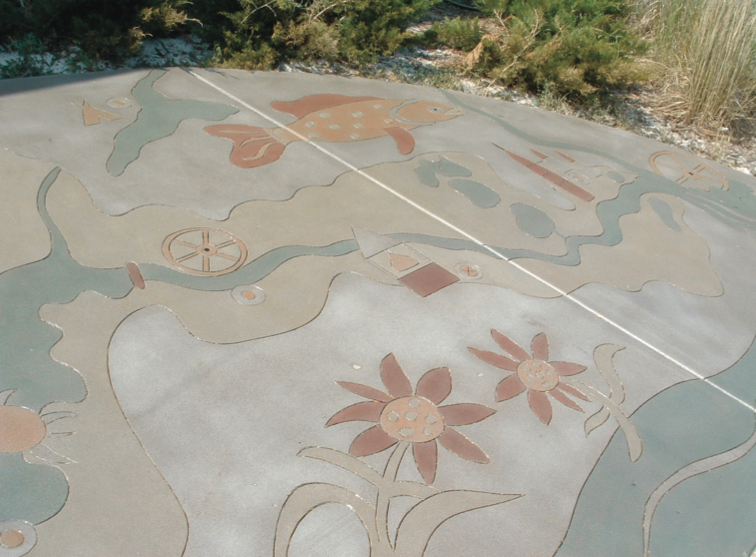
A large map of the Minnehaha Creek Watershed District was installed as a ground plane mural.

One natural playground we designed was titled: “We are Water”. It is a pre-school environmental play yard created to engage the children, families, staff and community of Eisenhower Elementary, Hopkins MN,  in a “conversation” to promote understanding and stewardship of water in our lives. The design describes the flow of water over the site and its management on-site to its release into the Minnehaha Creek Watershed. Children can stand where they live and go to school and see that Lake Minnetonka flows into Minnehaha Creek and the Mississippi River into the oceans of the world. It prompts conversation about geography, natural history and being connected with the world by water.
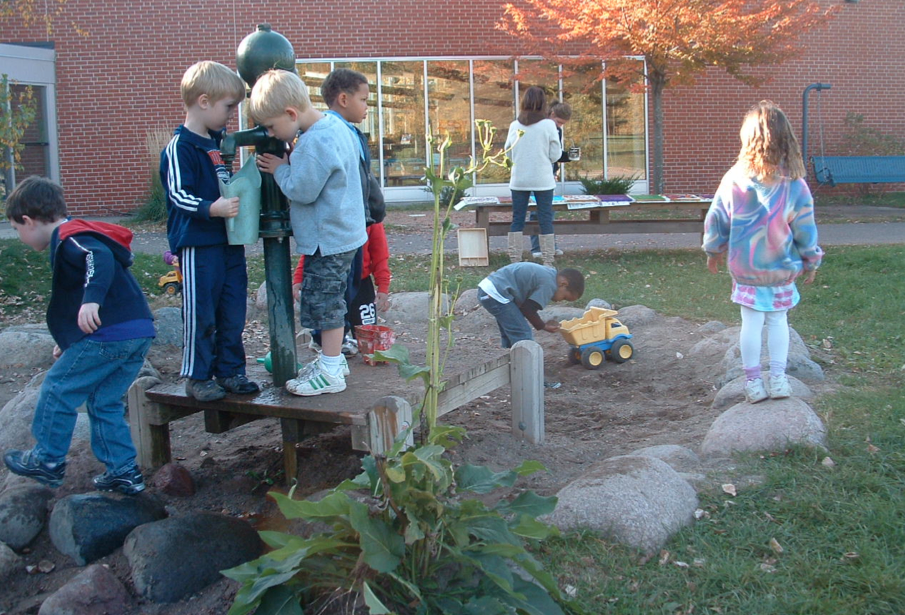
Water pump and sand area.

Water pump and sand area.

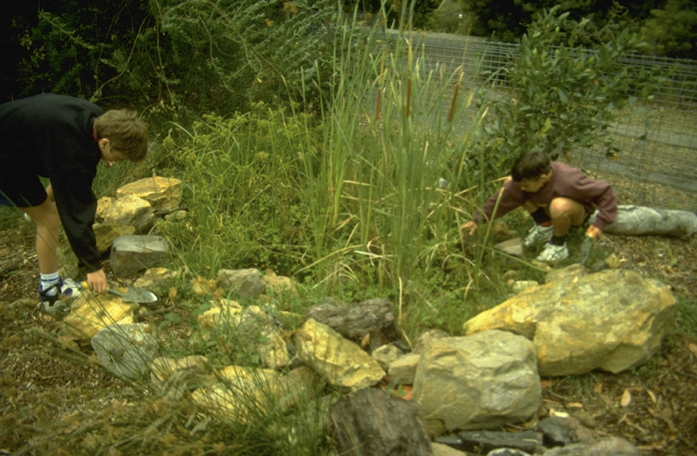
The movement of water over the site is addressed along the blue river pathway, under a bridge, over land to the sand area and farm pump. As the children pump water it cascades down a rocky stream bed into a rain garden, rather than a storm water culvert. Alongside the rain garden a sign asks, “Where does water go?”
 

six legged frog
six legged frog

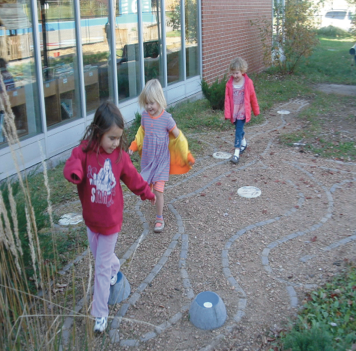
Frog Labyrinth

Frog Labyrinth designed by William Grace Frost. Volunteers were involved in the installation.


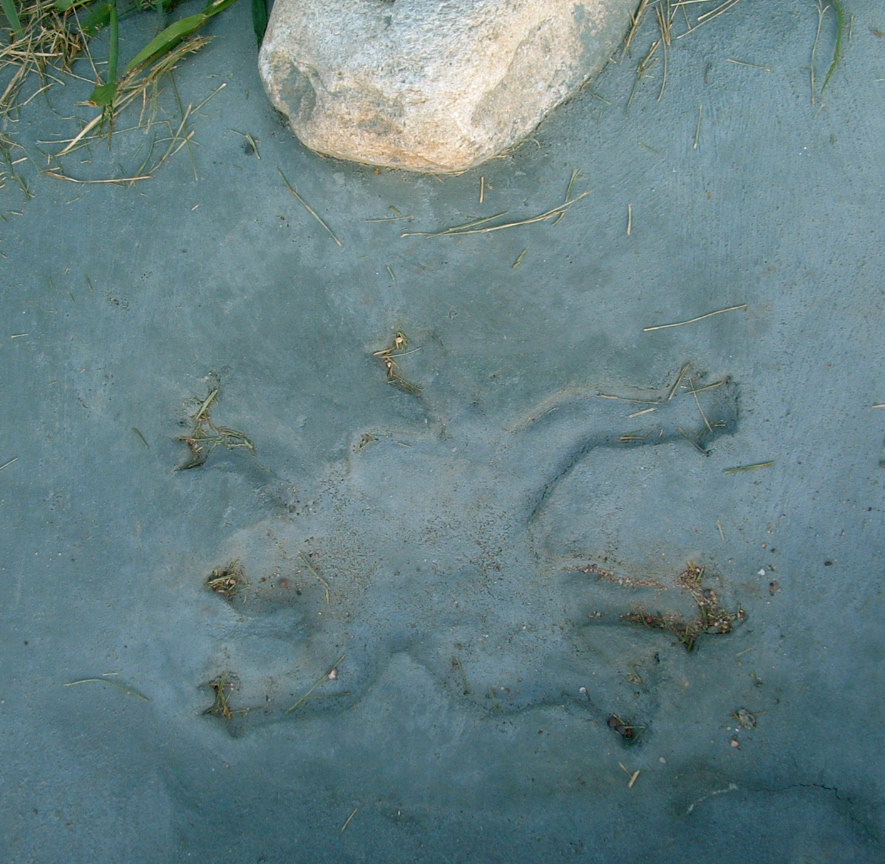
Throughout the site a six-legged frog appears.The six legged frog is a reminder that our actions impact other creatures that share our water (Deformed frogs were first discovered in Minnesota in 1995). A frog labyrinth with the story of the frog in “hopping stones”, offers imaginative play as well as the healing gesture of labyrinths.
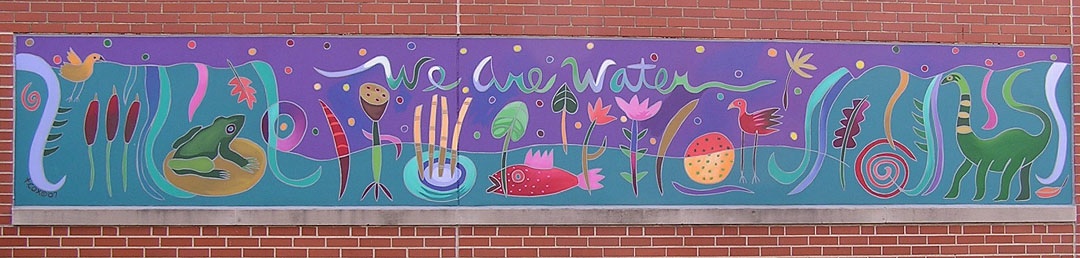
 

We are the Water (Teresa Cox  www.teresacox.com.)

We are the Water
(Teresa Cox www.teresacox.com.)

The 4’x 20’ “We are Water” wall mural gives visual identity to the site and reinforces the message. On the mural there is an image of a dinosaur, which reminds children that we drink the same recycled water the dinosaurs drank.
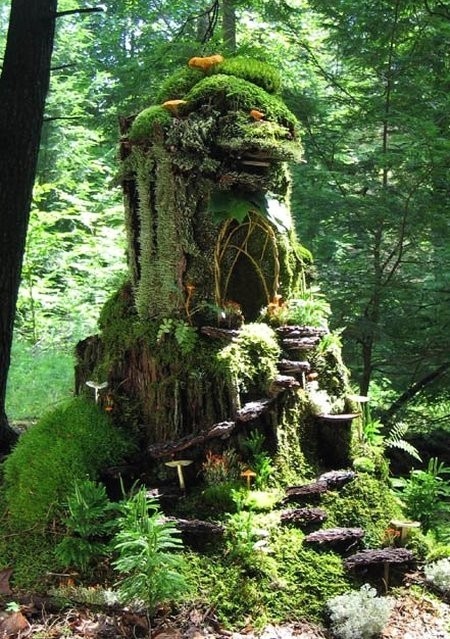
 

Elf house

Elf house

Design Considerations

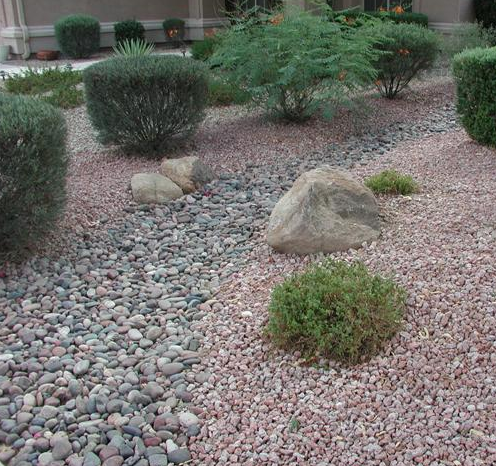
  • Enhance the site opportunities with natural elements such as: water, sand, grassy hills, dirt mounds, round boulders, gardens, trees, shrub niches, wild life inhabitants, bird houses and feeders.
  • Pile snow from plowing in an accessible play location.
  • Play with scale, miniatures, troll and fairy houses.
  • Create digging mounds, add “relics” for archeological treasures.Screen Shot 2013-12-30 at 11.49.37 AM
  • Create a fort or camping zone with tents and natural materials.
  • Add an unusual (safe) object or piece of art. My favorite was a 20’ tennis shoe dropped in the middle of a typical neighborhood park.
  • Finally and obviously, the absolute best play yard is a messy, wild looking environment that engages children in their natural play world.
Screen Shot 2013-12-30 at 12.02.59 PMFor more information on Natural Playgrounds, go to:

                                                         www.firefliesplay.com                                                                         Camille Calderaro, MLA, ASLA, CPSI                                                                                           Bill Bleckwenn, RLA, Natural Resource Planner, LEED
 

Posted in Connecting to Nature, Photography/Art | 1 Comment

The Wolf Within – A Poet’s Heart

karenShragg(Editor’s note) Karen’s voice is one of guardianship and caring for the Earth. It is a voice that we all need to pay more attention to. When I finished reading her book, I felt awakened and emotionally shaken.

Karen Shragg is an author of children’s books, poet, naturalist and  an over-population activist. She has been the director of Wood Lake Nature Center in Richfield, MN since 1991.  Her most recent work, The Wolf Within, is a selection of poems that she says comes to her in the early morning hours. Karen’s book is available on Amazon, and she has graciously allowed me to select a few poems to share with the readers.


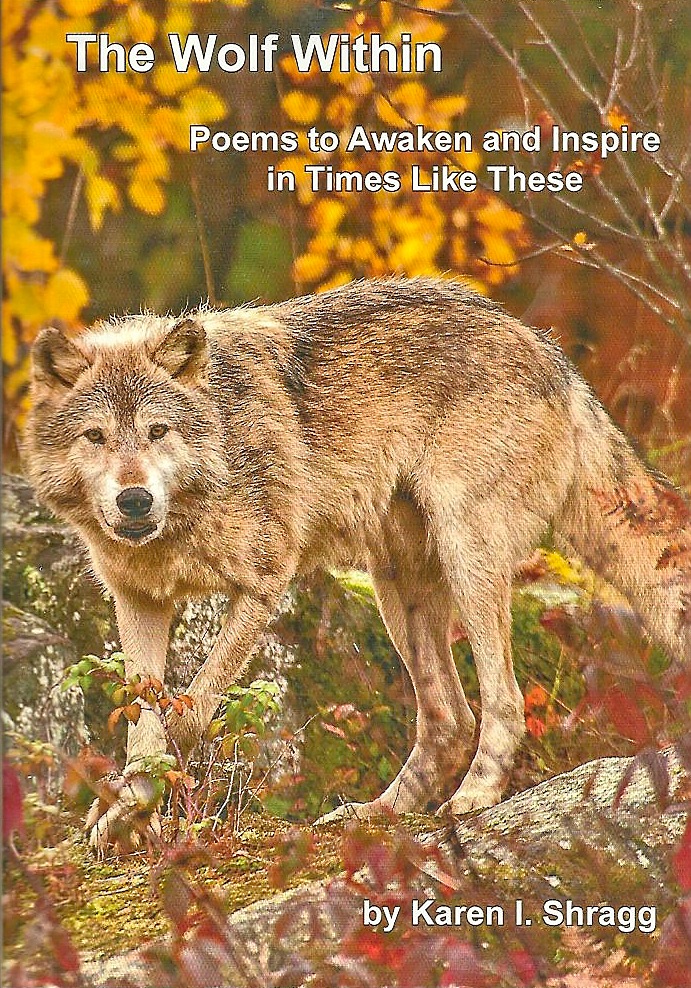
The Wolf Within

History repeats itself

When no one’s paying attention

cover photo by Stan Tekiela

cover photo by Stan Tekiela

They opened a season on your majesty

Barely recovered from the last time your absence

Encouraged the elk and deer to kill off the forests.

Now hunters drool to get a piece of your fur

On their mantles

Killing you as if there could ever be enough

of your packs of predatory prowess

of your tight knit families

of your nerves of steel

You are part of the balance

A part of our spirit

We all have a wolf within

A shared story of survival

Use your cunning to find

Reservations that will protect

You from the slaughter

Canis Lupus, friend of the wild

Keeper of the the Ojibwe spirit

Protector of the balance we once knew.


Fracking

soundofheart.org

soundofheart.org

Frack it

Crack it

Pump it

Dump it

Pollute it

Loot it

Pile up lies

Ignore the cries

Fuel the greed

Feed the need

Rape the land

To get the sand

I wish they’d never found

This poisoned goo under the ground

Fracking


Beyond

 I believe in things science cannot measure

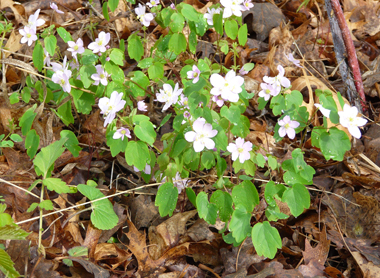
Hepatica (Wade)

Hepatica (Wade)

Like the joy of laughter erupting between two friends

When lovers talk

Using only their hands

When beautiful melodies reach your ears

and dance in your soul

When art reaches your eyes and lifts

you off the ground

When the first blooms of spring

Make you feel like singing to strangers

Being open to embracing the immeasurable

Asks only that we leave dogma in the dust.


Loon Speak

If only I spoke Loon

Or Maybe Kingfisher

Or Egret, even Heron would do

Kingfisher www.northwestnaturalimagery.com

Kingfisher
www.northwestnaturalimagery.com

I would tell them all not to fly

To the Gulf this fall

Go somewhere

We haven’t yet destroyed

Skip over the oil-slicked waters

So you can return to us in the spring

But even if I could

Speak to the migrators

How would I explain

What happened to their home?


Remember Me With Laughter

Remember me with music

You’ll always sing my song

Tears pump through your veins

but don’t let them linger long.

Remember me with laughter

Now that my time is due

Death may be our journey

But I live on through you.

Remember me with moonlight

From full to when brand new

The moon will be my residence

So I can shine on you.

Remember me with summers

The times when we were clever

Memories savored one by one

Just know my love’s forever.


Posted in Nature Poetry | 3 Comments

Frozen River

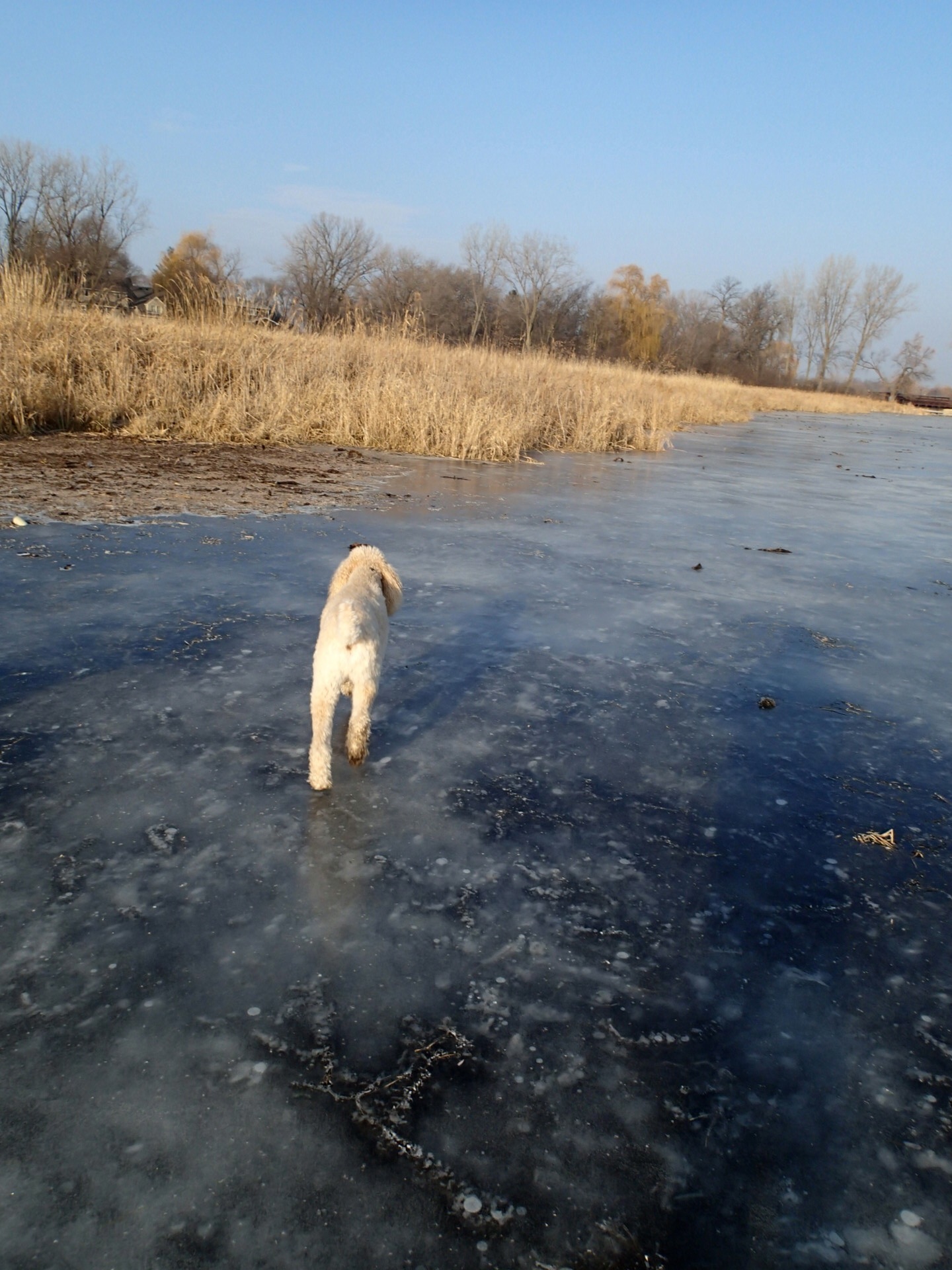
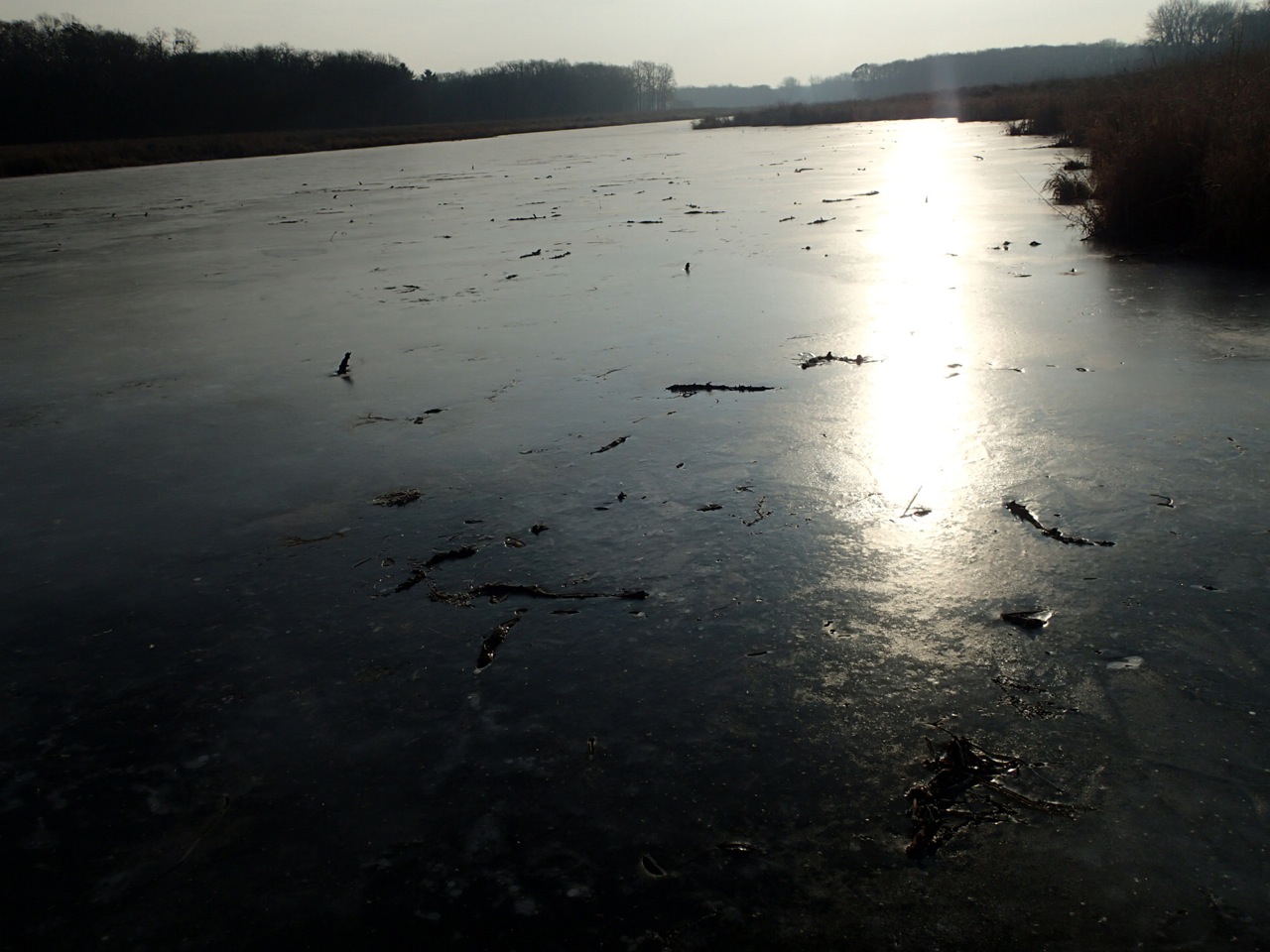
Morning hike – a little unsure of the new formed ice

OLYMPUS DIGITAL CAMERA

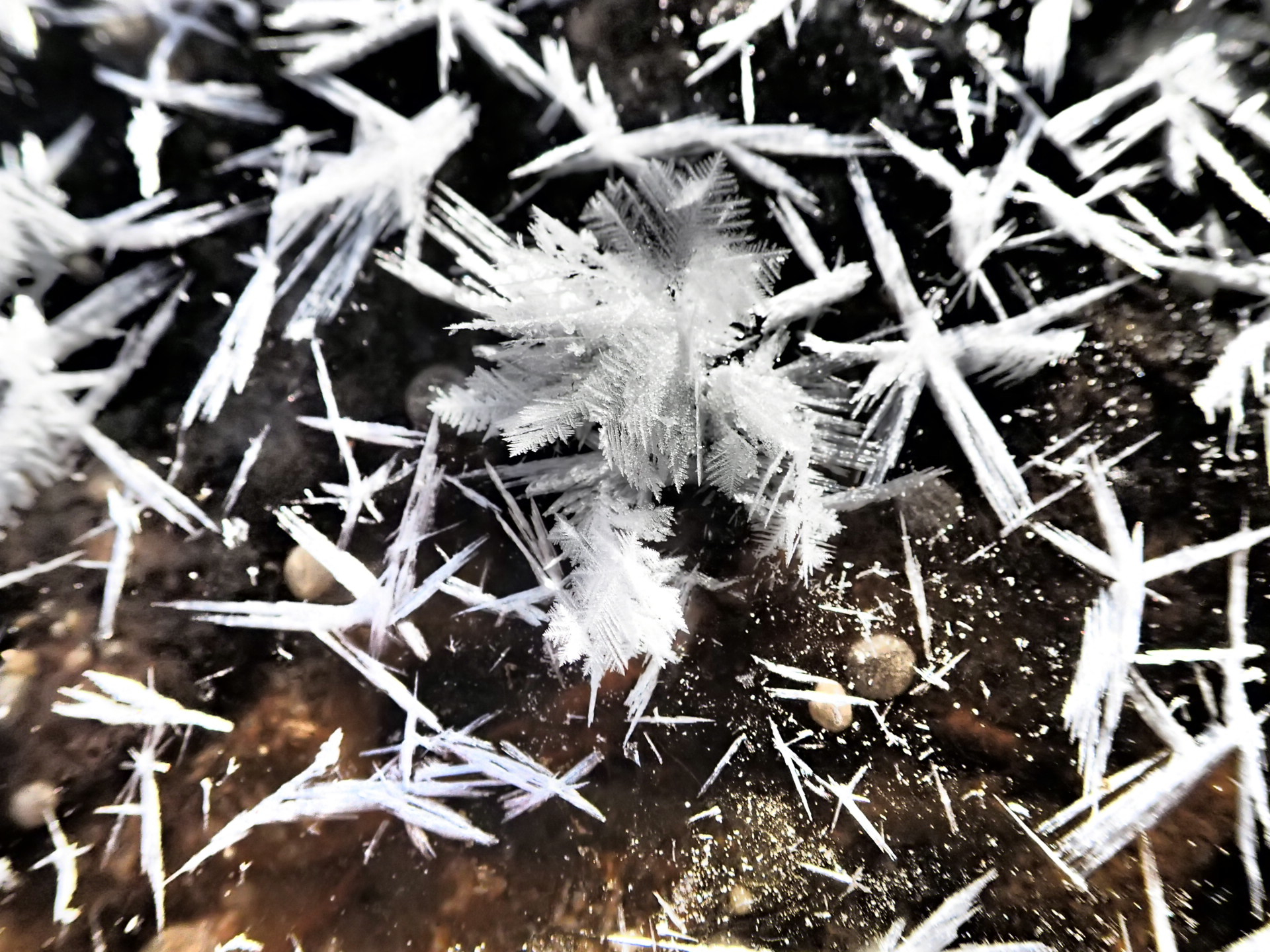
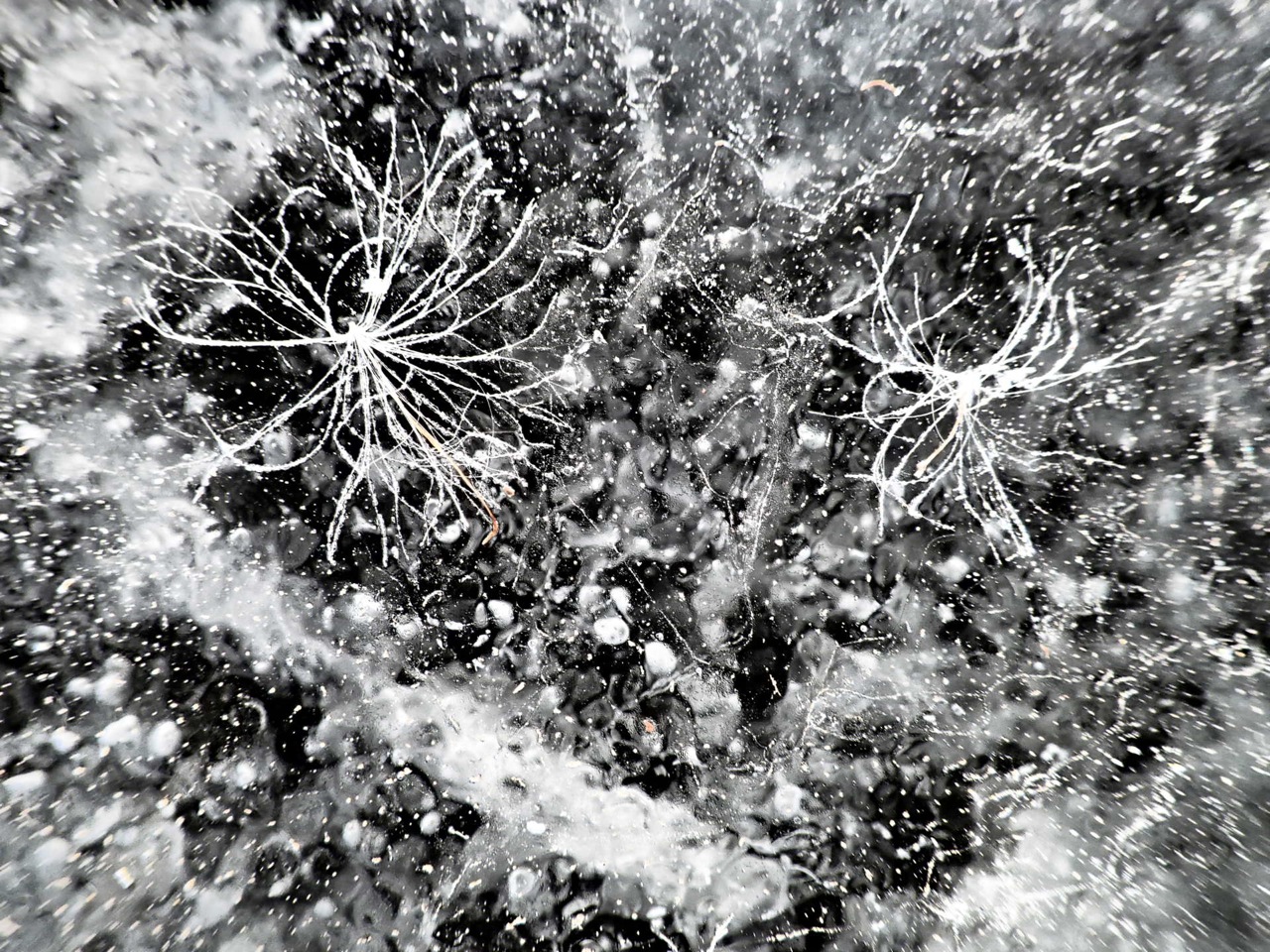
Hidden beauty, frozen in time

OLYMPUS DIGITAL CAMERA

OLYMPUS DIGITAL CAMERAOLYMPUS DIGITAL CAMERA


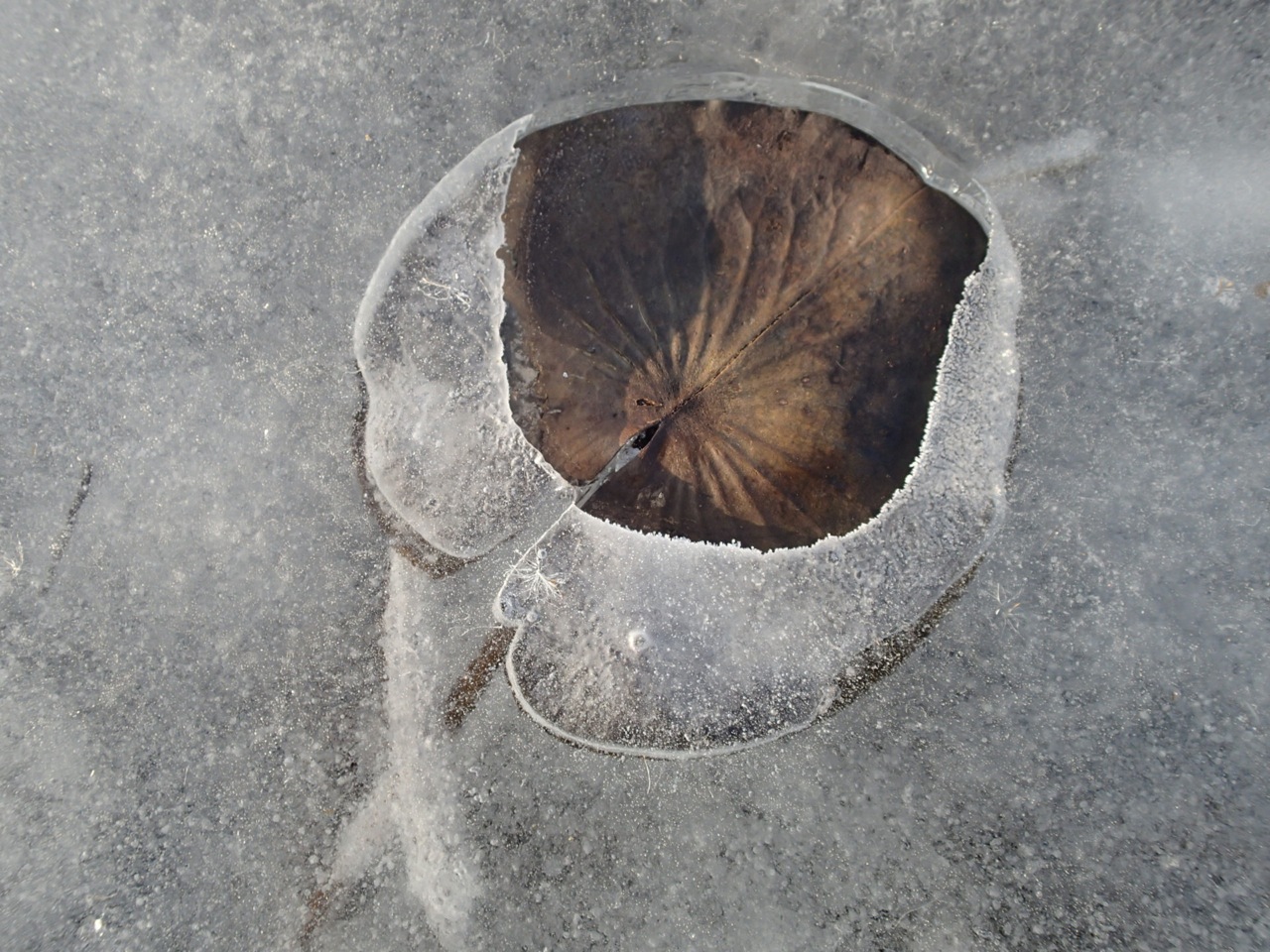
Memories of a summer long gone

OLYMPUS DIGITAL CAMERA

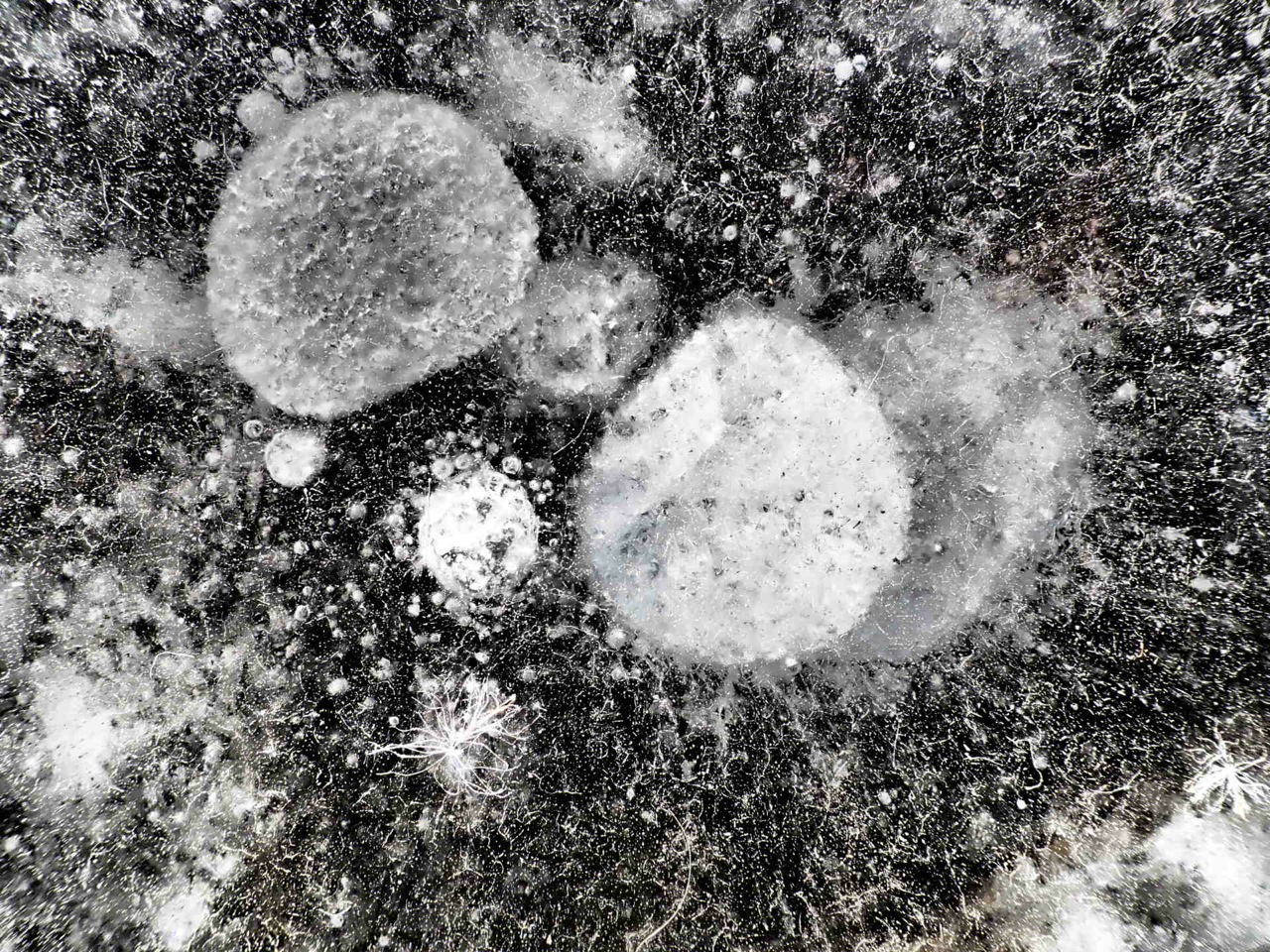
The inner space of a frozen river

OLYMPUS DIGITAL CAMERAOLYMPUS DIGITAL CAMERA


Elaborate art installations litter the river walk

OLYMPUS DIGITAL CAMERA

 Unexpected gifts of life

OLYMPUS DIGITAL CAMERA

Posted in Nature Notes, Nature Poetry, Photography/Art, Winter | 8 Comments

Adaptations of Mammals

Cual es una adaptación
A-dap-ta-ción
Un cuerpo
de un animal
Cambia
Para ayudar
a sobrevivir
En su entorno
El zorro
puede oler bien
Para encontrar su presa
(sniff)
El tejón
cavan agujeros
Con su garras grandes
El murciélago
puede volar
Para agarrar los mosquitos
Eso son adaptaciónes.
A-dap-ta-ción


What’s an adaptation?
A – dap – ta – tion
An animal’s body
Changes
To help it survive
In its environment
A muskrat swims in a pond
with its webbed feet
A bat flies in the sky
To catch mosquitoes
A badger digs in the ground
with its sharp claws
Those are adaptations!
A-dapt-a-tion

Posted in Mammals | Leave a comment

Our Little Red Dragonfly

My sister, Carol Izad, submitted this story about her relationship with a little red dragonfly.

Screen Shot 2013-11-06 at 4.57.48 PMDuring the summer months I have my two granddaughters for the day once a week. One of the activities we do together is swimming; usually for a couple of hours. They like to play with water guns; shooting streams of water at the waterfall that flows from the Jacuzzi into the pool. The first week of June while they were shooting their water guns a little red dragonfly showed up and danced around the water that came out of their guns. “Did you see that?” we all shout with delight. He continued to play with the girls the rest of the afternoon. We were amazed how he entered our world of play and seemed to

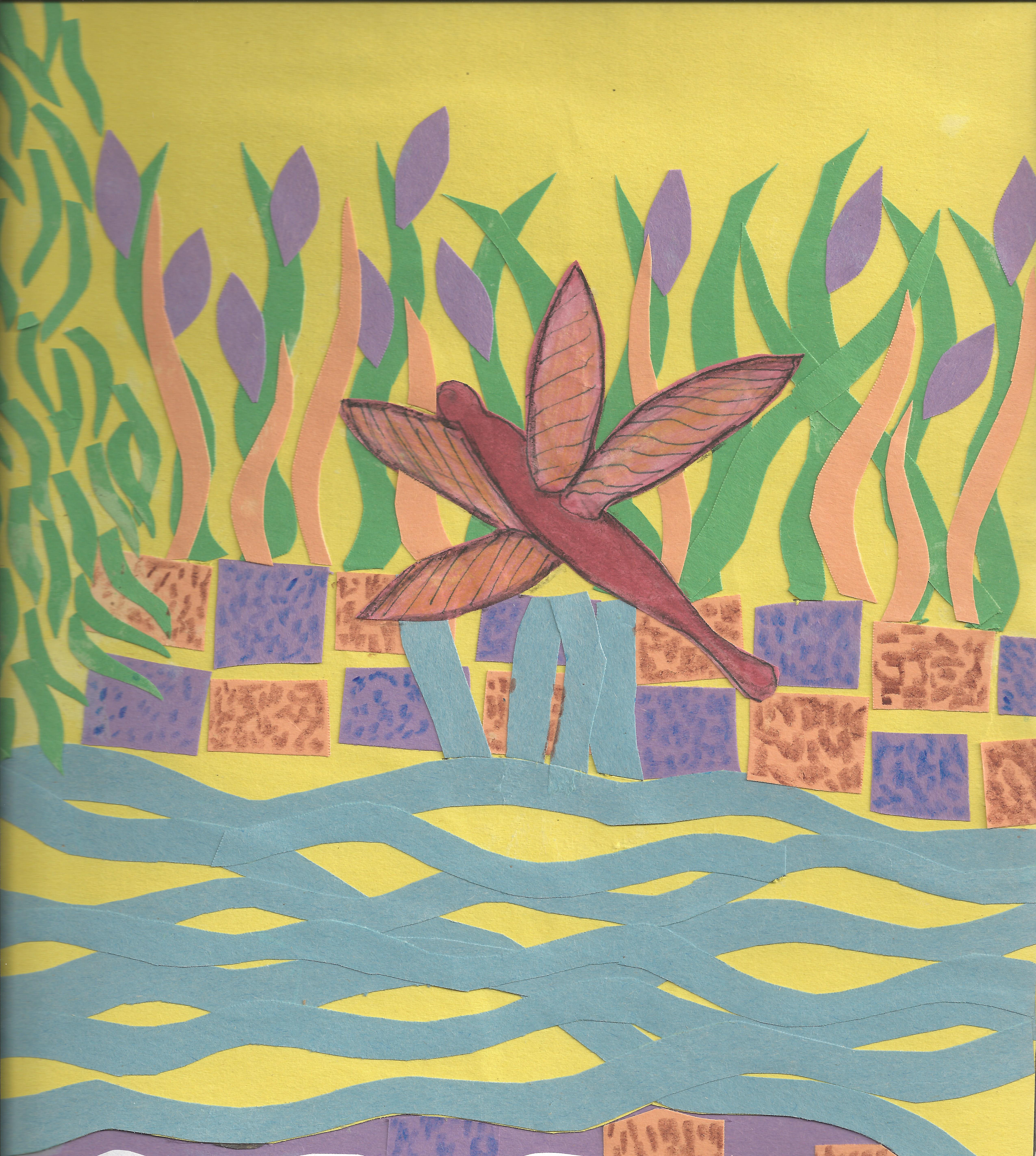
Our art project honoring the red dragonfly

Our art project honoring the red dragonfly

have as good a time as we did. How can this be? Week after week all through the summer he showed up when ever we were in the pool. He dance and dove around our heads and loved it most when the girls would shoot their water guns. Sometimes he would bring a friend… not for a drive by but to play. Who would believe?

Posted in Photography/Art, Uncategorized | Leave a comment

Las Rocas Glaciales de Minnesota

Bienvenidos a nuestro laboratorio de las rocas glaciales. Minnesota tiene una rica historia geológica. Por eso vamos a estudiarla.
Que es un geólogo?
Un geólogo estudia las rocas y la historia de nuestra planeta.


La mayoría de las rocas estudiamos hoy, son de esta área.
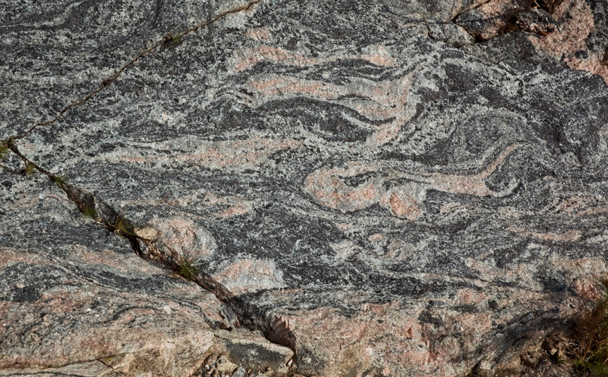
Encuentre la roca que está mostrado abajo. Diga un hecho sobre esta roca. Porque está importante?

sciencebuzz.org

Morton es una pequeña ciudad, a una hora al oeste de aquí, donde hay algunas de las rocas más antiguas de la tierra, las cuales se formaron hace más 3 mil millones de años.

world-visits.blogspot.com

world-visits.blogspot.com

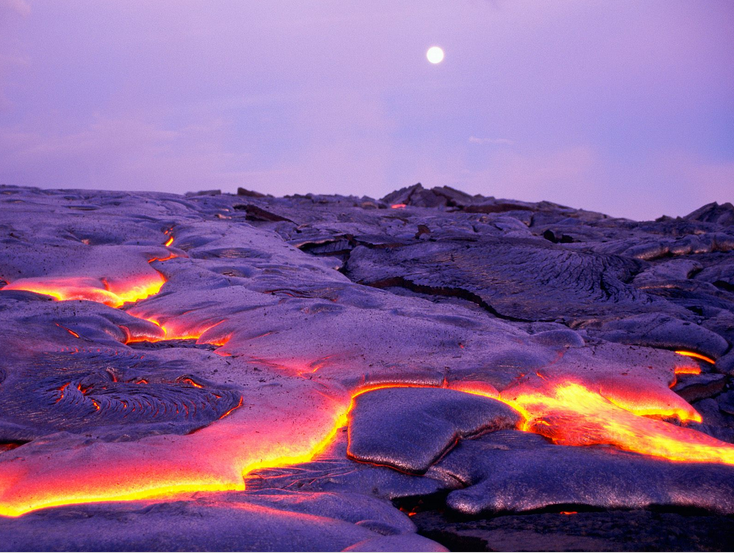
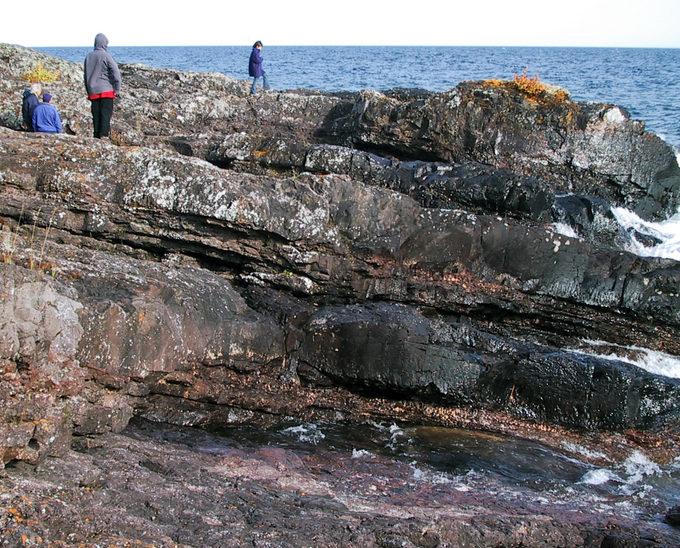
Ahora, vamos a avanzar en el tiempo. Hace mil millones de años habían volcanes en la costa norte del lago Superior. Encuentre una roca de esa época y diga un hecho.

serc.carleton.edu

Hoy en día, se pueden ver las rocas de lava en la costa.

fossilsandotherlivingthings.blogspot.com

fossilsandotherlivingthings.blogspot.com

Ahora vamos a avanzar en el tiempo,

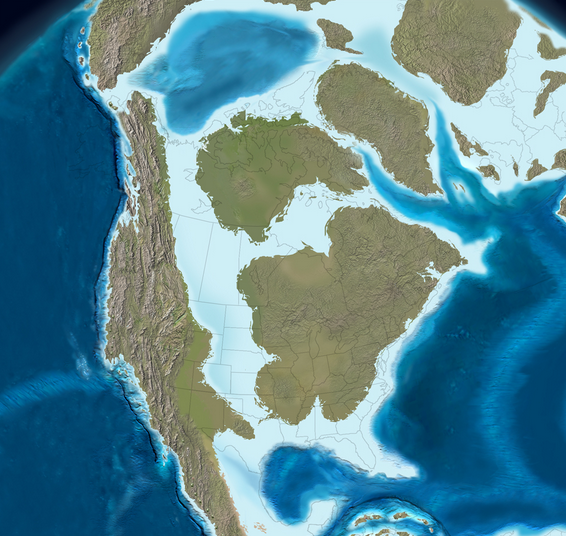
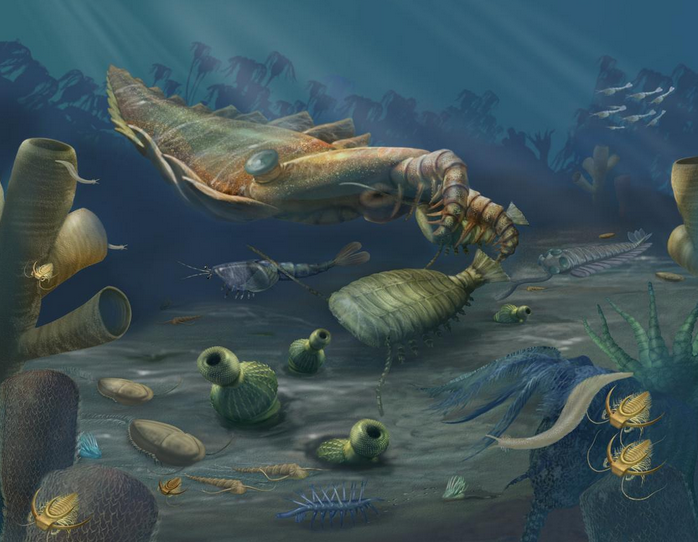
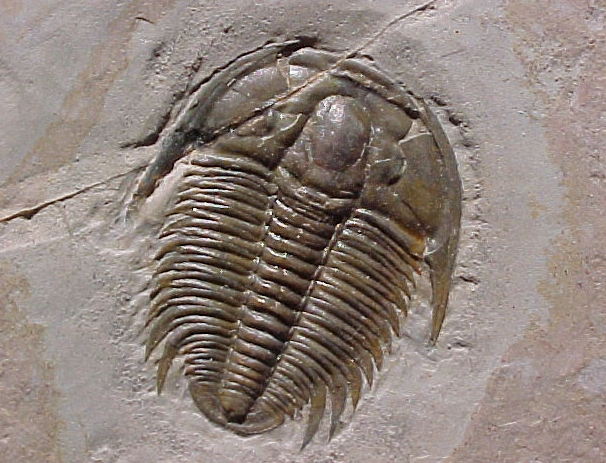
Hace más de cuatrocientos millones de años un gran mar se formó dentro de la mayor parte de América del Norte, y cubrió una gran parte de lo que hoy es Minnesota.  Encuentre una roca de esa época y diga un hecho.

ocean.si.edu

Squid – ocean.si.edu


Hoy en día, se pueden encontrar fósiles de las criaturas que vivieron durante ese tiempo.

http://ledgardjespsonarchaeologyrebrand.blogspot.com

Trilobite – http://ledgardjespsonarchaeologyrebrand.blogspot.com

cosmographicresearch.org

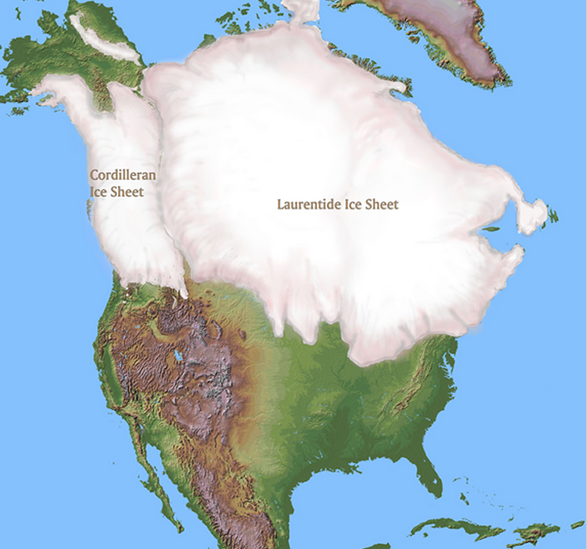
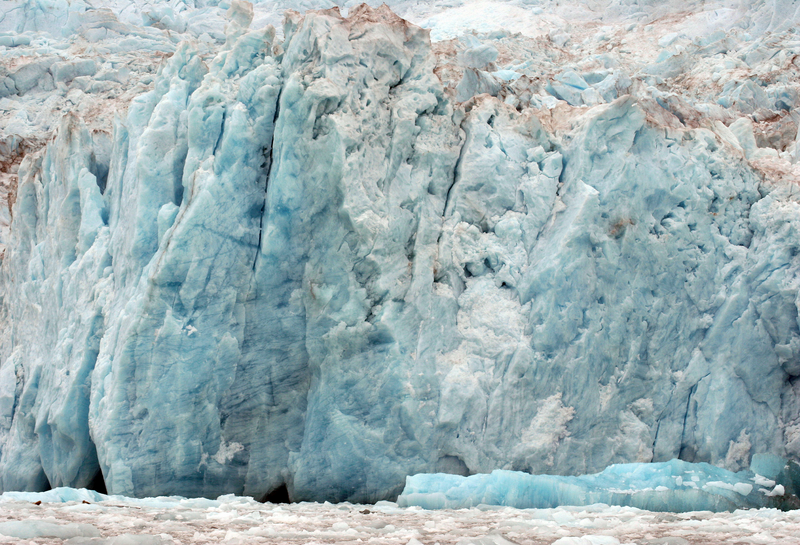
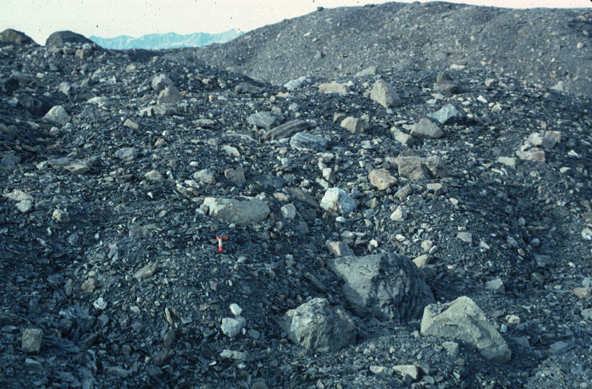
La época glacial fue hace solamente quince mil años. Los glaciares tenían más de una media milla de altura, y estos se movían solo unos pocos metros por año, moliendo la tierra y trayendo rocas con ellos. La mayoría de las rocas que estudiaremos hoy, estaban en glaciares.

commons.wikimedia.org

commons.wikimedia.org

jesse.usra.edu

jesse.usra.edu

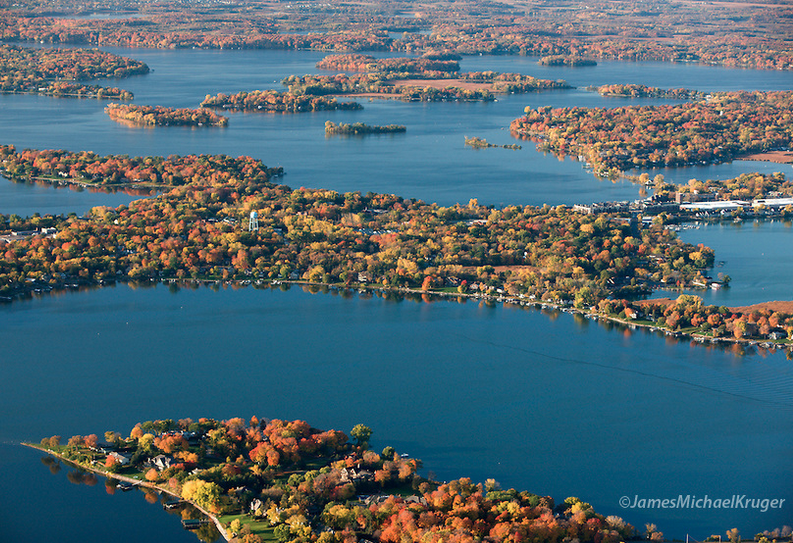
Cuando los glaciares se derritieron, formaron colinas, también formaron lagos en nuestra área incluyendo el lago Minnetonka, Lago Lotus, Lago Shady Oak y diez mil otros lagos.

kruger.photoshelter.com

kruger.photoshelter.com

basementgeographer.com

basementgeographer.com

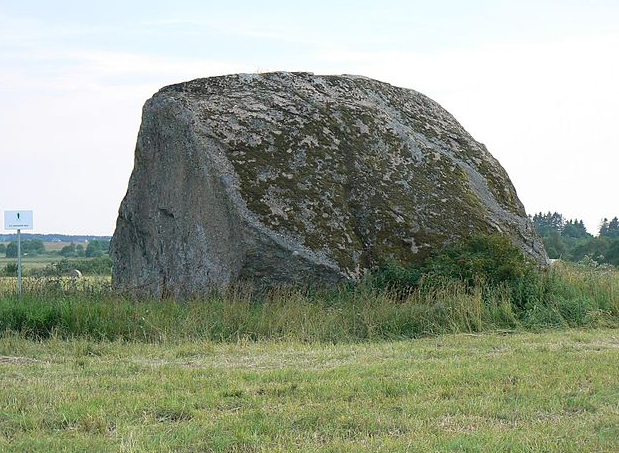
¿Has visto enormes rocas en tu barrio? Esas rocas estaban en la parte superior del glaciar y nunca fueron molidas en el hielo del glaciar. En inglés se llaman “glacial erratics”.

www.mymagicelves.com

www.mymagicelves.com

Posted in Spanish | Leave a comment

Poetry Haiku

Haiku
Is a way of seeing the world.
Each haiku can capture a moment of an experience
An instant when the ordinary
Suddenly reveals its inner beauty.

Each poem is 3 lines
Line 1: 5 syllables
Line 2: 7 Syllables
Line 3: 5 Syllables

Try to follow these guidelines –
BUT it is better to write a haiku from your HEART
than it is to have a perfect 5-7-5


OLYMPUS DIGITAL CAMERAA human hand
Some hands caring for nature
Others destroying


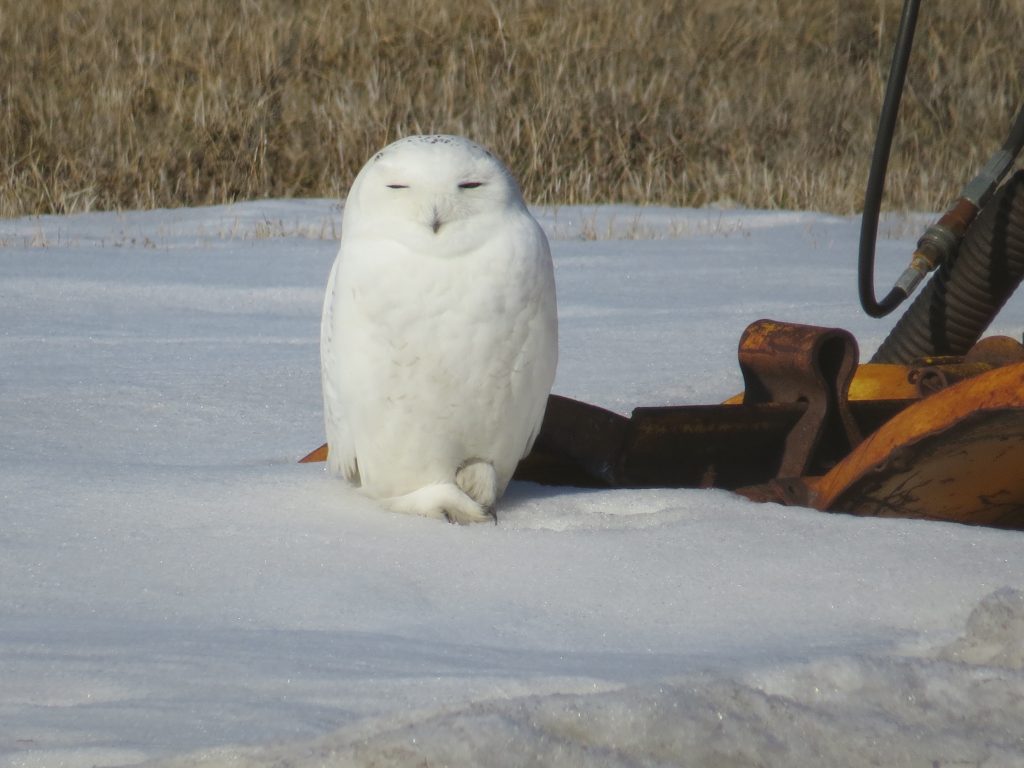
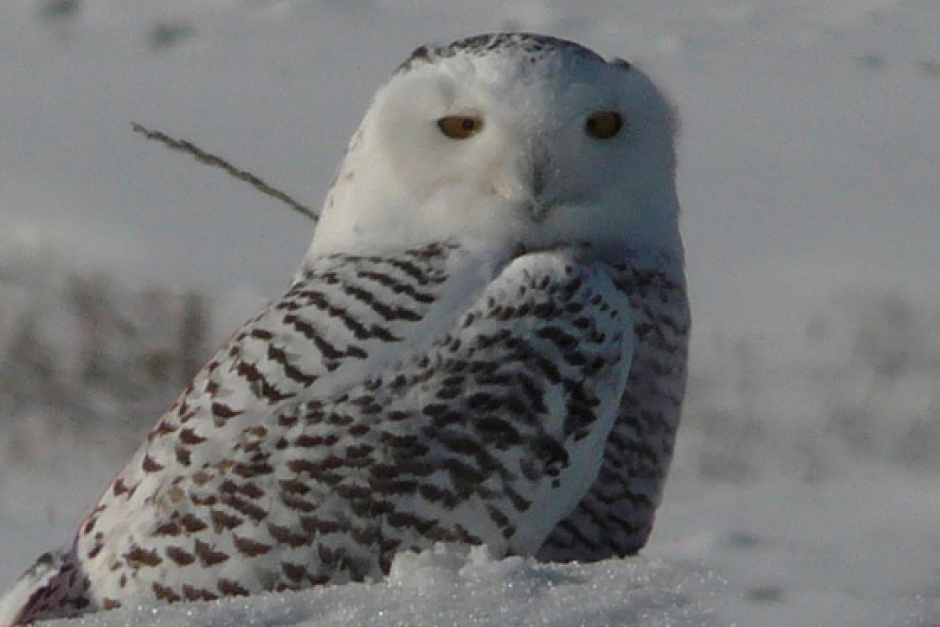
CathyVanderBerg     SnowyOwl


Photo by Steve Barnier

Eagles patrol the creek

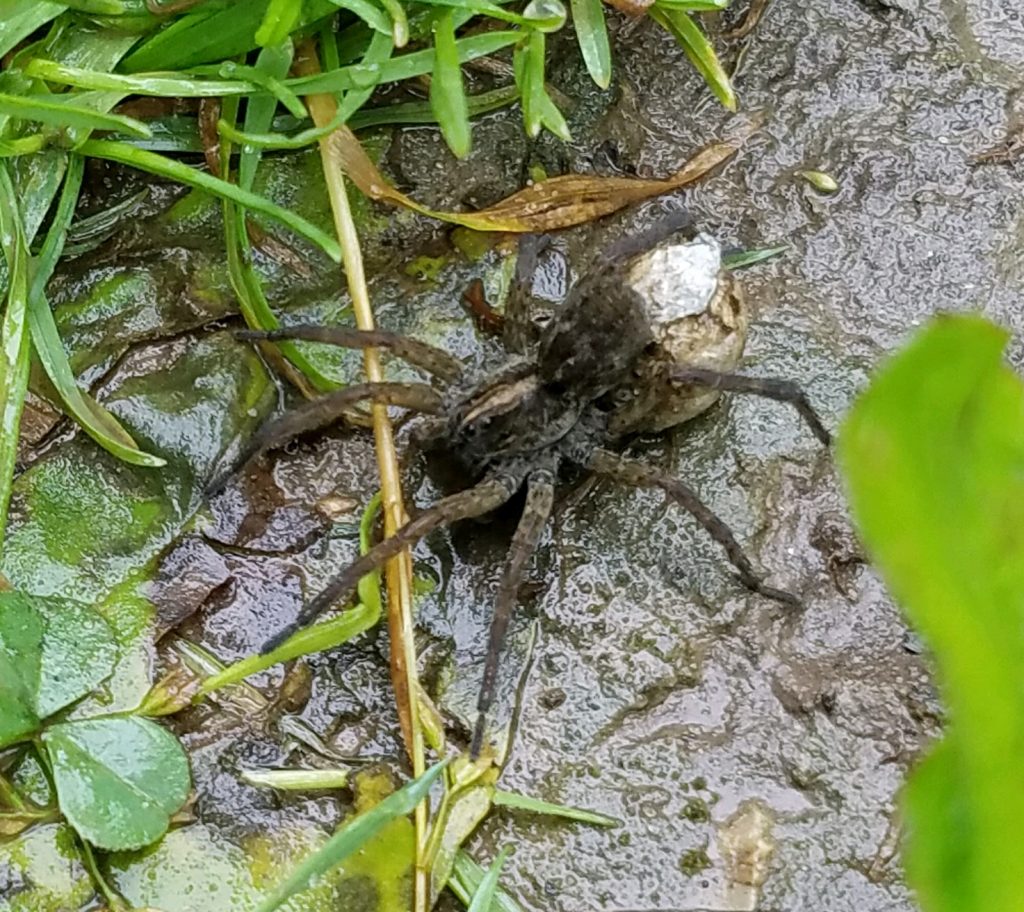
Wolf spider
Lorie Regenold

Wolf spider
Lorie Regenold


Posted in Connecting to Nature, Nature Poetry | Leave a comment

Poetry-Cinquain

Cinquain

Line 1 One word that names an idea, a feeling  a thing

Line 2  Two words that describe it ( what it looks like or feels like)

Line 3  Three words which tell what it is doing, has done or will do

Line 4   Four words telling how you feel about it. An observation of it

Line 5 One word which sums it all up; a synonym  to the title;

Screen Shot 2015-10-13 at 7.57.15 PM

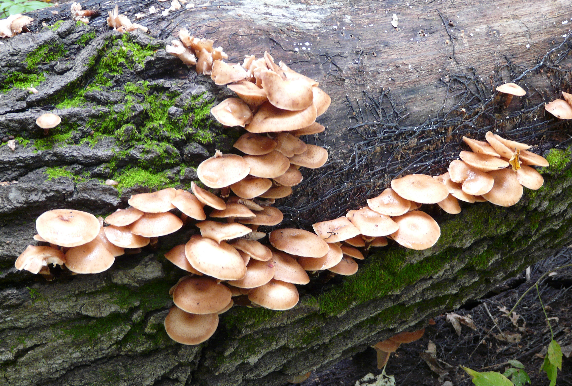
Fungus
Spongy Soft
Death and Life
Surprised to See Beauty
Decomposition

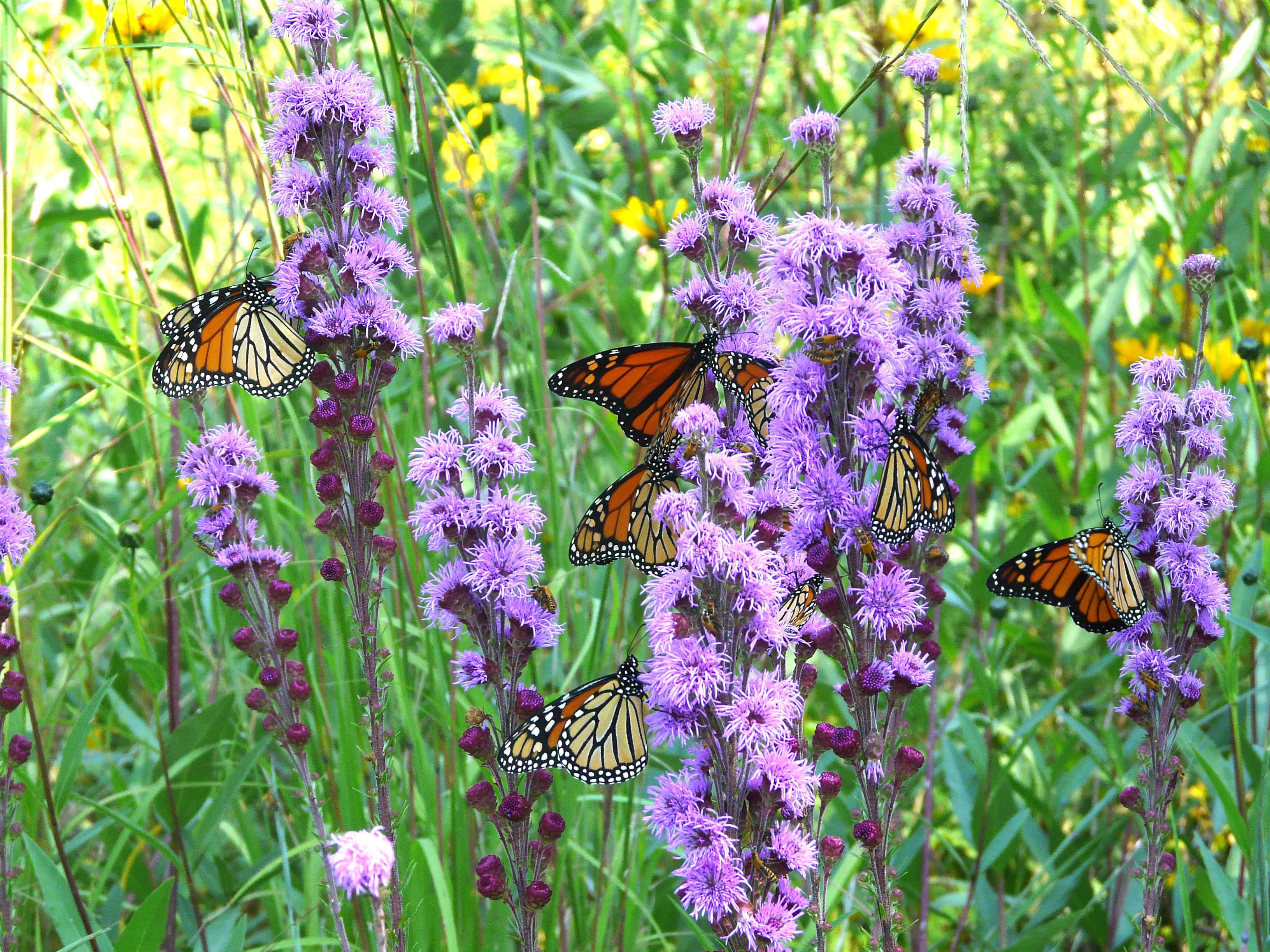
monarchMigrationMonarchs
Orange and Black
Preparing for Migration
Magical wonder in Flight
Beauty

OLYMPUS DIGITAL CAMERA


Screen Shot 2014-10-24 at 11.49.12 AM

IMG_7826

P1030445

Posted in Nature Poetry, Uncategorized | Leave a comment

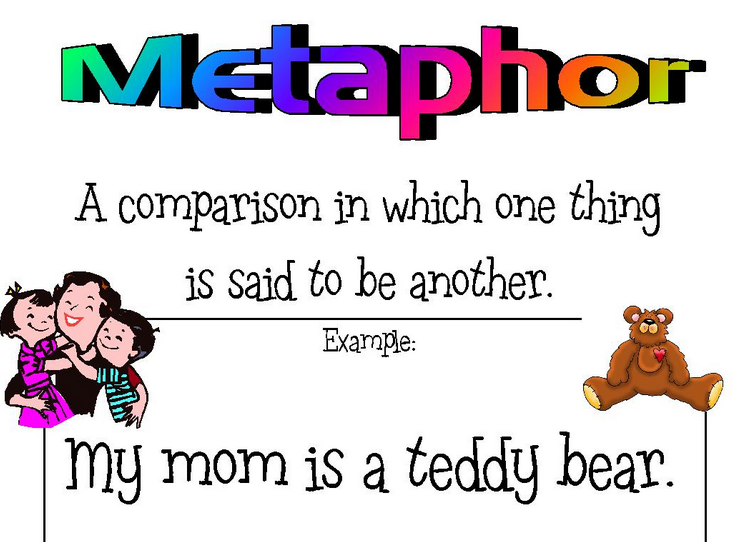
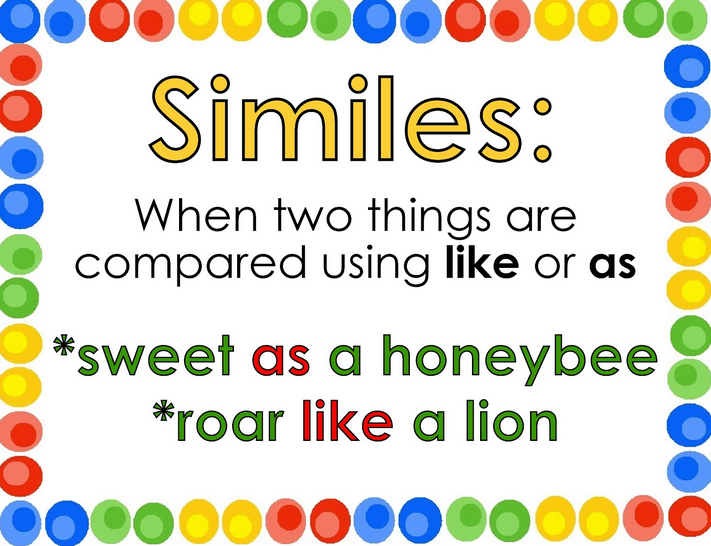
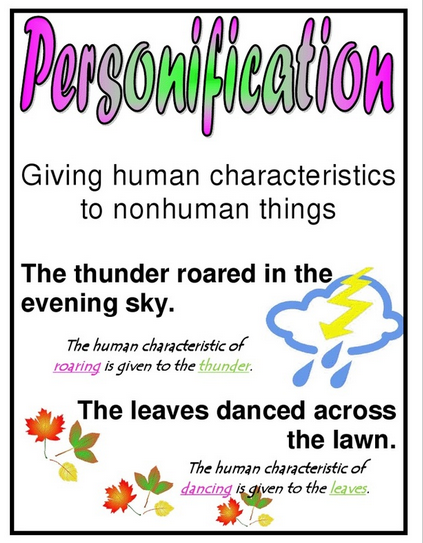
Poetry Day 1 – Metaphor, Simile, and Personification

Metaphorfigurativelanguagetime.weebly.com

Metaphorfigurativelanguagetime.weebly.com


similewww.glogster.com


Personificationmskyriazis.weebly.com


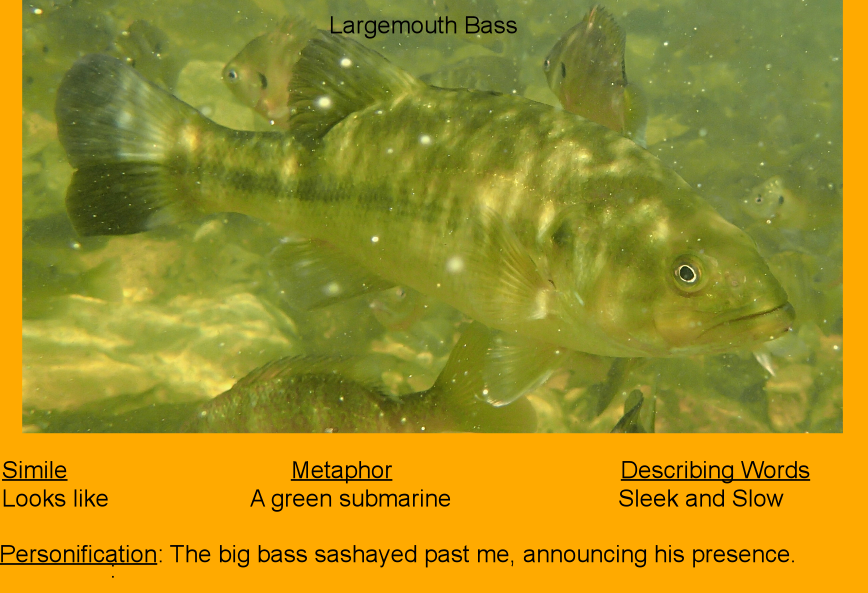
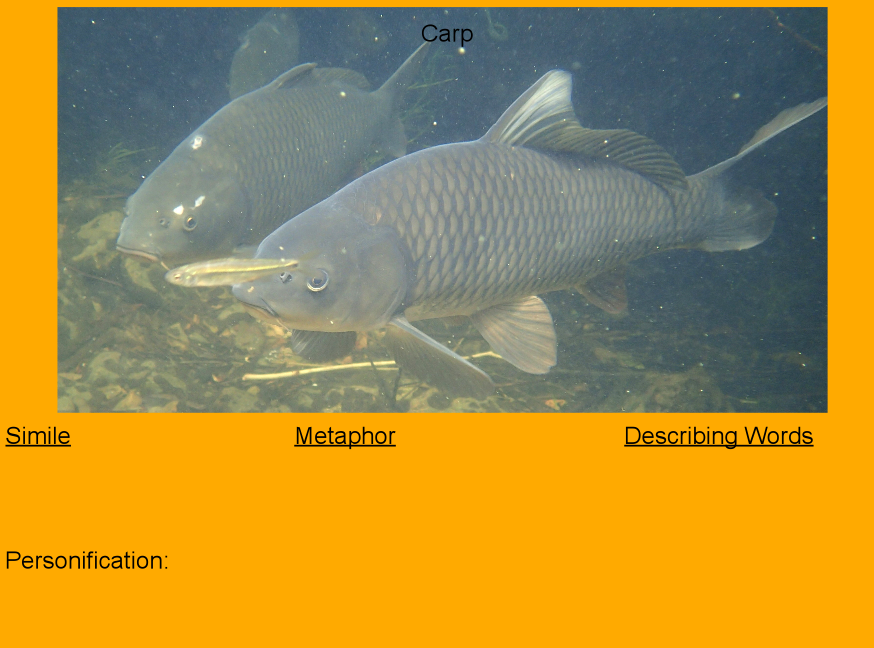
bass poetry

OLYMPUS DIGITAL CAMERA


OLYMPUS DIGITAL CAMERA

cropped-SnowyOwlWade.png

Listening, looking, and wondering
Blades of tall grass reach for my foot
And a gentle breeze ruffles by hair
My spirit soars like the hawk gliding overhead
A fern beckons me, like nature’s hand
And bird’s nest called me into the woods
The falling fog uplifts
A wonder to behold
My life and perspective is forever changed
.
Jackson Risser


Posted in Nature Poetry | Leave a comment

Flood Rescue – A Guardian’s Tale

                  Article by Linnea Palmstrom

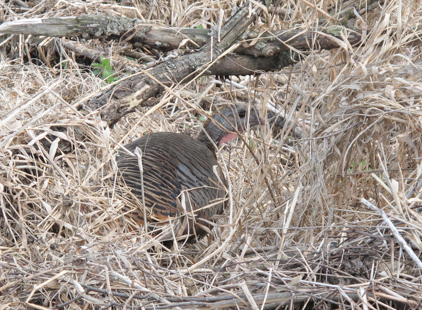
In May 2013, a wild turkey made her nest near Nine Mile Creek.

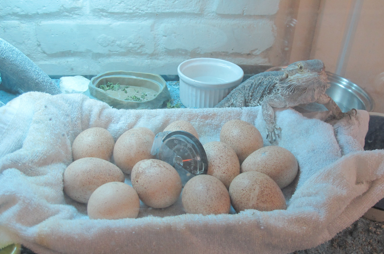
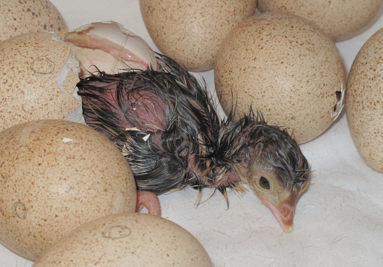
I like to take frequent walks around Nine Mile Creek by Edina High School. In early May, I saw a turkey mother sitting on her nest. On May 17-18 a big storm hit and the whole area was flooded. After the storm, I checked on the nest and realized that the mother had disappeared and the eggs were floating in the creek water. I found eleven eggs and carried them home. The Wildlife Rehabilitation Center will not hatch eggs so I put them in my bearded dragon’s cage to keep them warm.  Information I found on the internet said to keep them at 99 degrees F and to turn them at least three times a day to keep the developing poult from sticking to the egg shell. A week later, I put them in an incubator I bought at Mills Fleet Farm.  Turkey eggs are supposed to take about 28 days to hatch.  In the beginning of June, I thought I saw the eggs moving a bit. I started to hear some peeping noises, too.

On June 4, the eggs hatched—all on the same day! Out of the eleven eggs, only one failed to hatch. However, nine of the turkey poults were unable to walk or even stand up properly. With a little research on the internet, I discovered they had spraddle leg, a condition in poultry that occurs when an egg experiences extremes in incubation temperature, such as floating in cold creek water. With this condition, a newly hatched bird’s legs splay outward and it can’t hold them together to be able to stand up.  If it isn’t treated in the first few days after hatching, the bird will never be able to walk. One way to cure this condition is by putting hobbles on its legs so that they don’t splay out. The legs then develop in the proper position and the bandage supports them so the bird can stand up and walk. These hobbles can be made out of Band-Aids and are easy to put on.  Within five minutes after putting the hobbles on, the poults were standing up and very active.  They enjoyed eating the mealworms and dandelion greens that I offered them. The hobbles needed to be kept on for 4-14 days.

The day after the turkeys hatched, I brought them to the Wildlife Rehabilitation Center so that they could have the best care. I checked up on them and found out that half of them were put to sleep because of the severity of their spraddle leg, but the other half were very healthy and growing quickly. Those five poults were released in a nature preserve in Inver Grove Heights so that they could join the wild turkeys there.

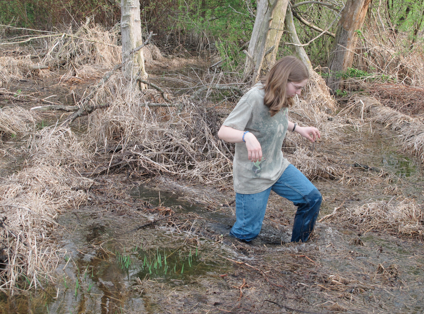
When Nine Mile Creek flooded, the turkey nest was a foot deep in water and the mother turkey had abandoned it.  In this photo, I was checking the nest site to see if I had missed any turkey eggs.
When Nine Mile Creek flooded, the turkey nest was a foot deep in water and the mother turkey had abandoned it. In this photo, I was checking the nest site to see if I had missed any turkey eggs.
My bearded dragon seemed quite proud of the turkey eggs when they were put in her cage.
A turkey poult seconds after hatching.
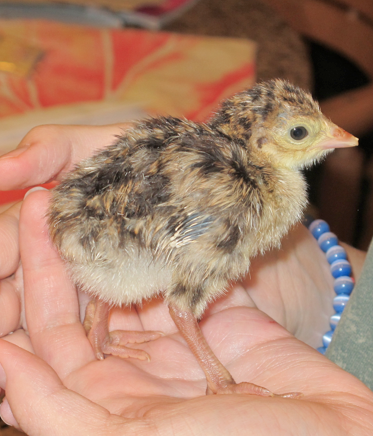
When the poults dried off after hatching, they were fluffy and beautiful.  This was the only one that did not have spraddle leg.
When the poults dried off after hatching, they were fluffy and beautiful. This was the only one that did not have spraddle leg.
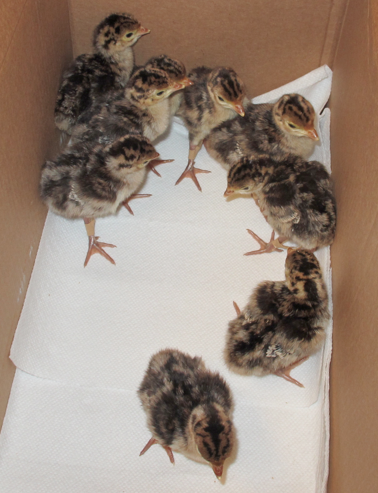
Here the turkey poults are getting ready to go to the Wildlife Rehabilitation Center.  The hobbles made out of Band-Aids can be seen on some of them.
Here the turkey poults are getting ready to go to the Wildlife Rehabilitation Center. The hobbles made out of Band-Aids can be seen on some of them.
Posted in Uncategorized | 7 Comments